
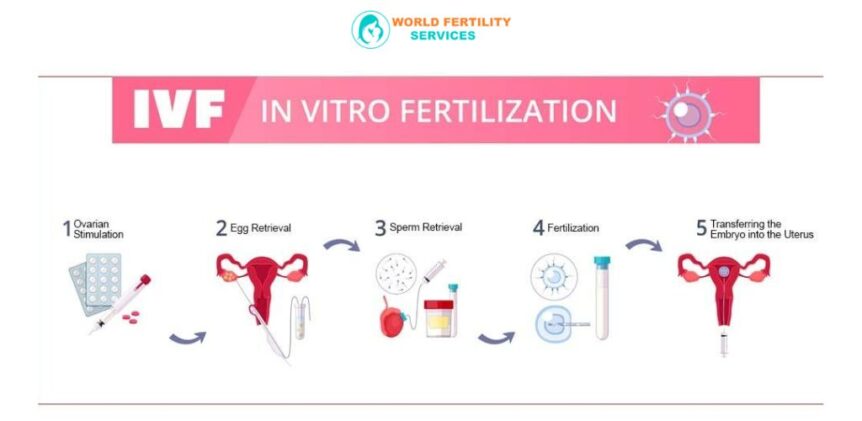
Let’s evidently know what are the 5 stages of IVF for infertility couples or individuals across the world. The process of In Vitro Fertilization consists of significant roles for sterile women who aren’t able to conceive a baby due to medical conditions. Certain couples are not familiar with the IVF treatment as initial patients of it. IVF stands for In Vitro Fertilization treatment in which the half treatment done in the laboratory or second half treatment is completed by the intended mother.
Despite this, we’ll also consider how much IVF costs approximately. Nowadays, infertility disease has been spread all over the world due to bad healthy lifestyle or genetic disorder.
As per the previous records we saw youngest couples facing infertility issues by following unnecessary habits, for instance, alcohol, smoking, bad food, poor quality semen, and blocked or damaged fallopian tubes that make a reason for infertility in both genders whether they are a female or male.
The 5 Stages of IVF Treatment
A clear, step-by-step breakdown of the In Vitro Fertilization process — from ovarian stimulation to your pregnancy test.
| Stage & Name | Duration | Key Steps | What to Expect |
|---|---|---|---|
|
1
Ovarian Stimulation
Superovulation
|
8 – 14 days |
|
Mild bloating, pelvic pressure, and mood shifts are common. The body is producing more eggs than usual — typically 10–15 follicles.
Avg. 10–15 eggs collected
|
|
Why this stage matters
More high-quality eggs increase the chances of having viable embryos for transfer. Stimulation protocols are personalised to your AMH level and antral follicle count.
Medications used
FSH (follitropin), LH, GnRH agonists or antagonists to prevent premature ovulation. Administered as subcutaneous injections — many patients self-administer.
Success tip
Stick strictly to injection timings. Irregular doses reduce stimulation effectiveness. Stay hydrated and avoid strenuous exercise during this phase.
|
|||
|
2
Egg Retrieval
Follicular Aspiration
|
30 – 45 min |
|
A minor outpatient procedure. Most patients rest for a few hours and resume normal activities the next day. Mild cramping or spotting is normal.
Performed 34–36 hrs after trigger shot
|
|
Why this stage matters
The number and quality of mature eggs retrieved directly determines how many embryos can be created. Ideal timing — exactly 36 hours after the trigger shot — is critical.
What happens in the lab
Retrieved eggs are graded for maturity (MII = mature). Only mature eggs proceed to fertilization. Immature eggs are discarded or may be matured in vitro (IVM).
Recovery advice
Rest the day of retrieval. Eat lightly. Drink plenty of fluids. Watch for OHSS signs: severe bloating, rapid weight gain, or difficulty breathing → contact your clinic.
|
|||
|
3
Fertilization
IVF or ICSI
|
Day 0 – Day 1 |
|
You are at home resting while this happens in the lab. Your clinic will call the next morning to report how many eggs fertilised — the first of many milestone calls.
ICSI used when sperm quality is low
|
|
IVF vs ICSI
Standard IVF lets sperm fertilize naturally. ICSI (Intracytoplasmic Sperm Injection) is recommended when sperm count, motility, or morphology is poor — or after previous IVF fertilization failure.
What the embryologist checks
At Day 1, two pronuclei (one from each gamete) confirm fertilization. Abnormal fertilization (1 or 3 pronuclei) means the embryo is discarded — a quality filter, not a failure.
Key success factor
Sperm DNA integrity matters significantly. If unexplained failures occur, ask about sperm DNA fragmentation testing before your next cycle.
|
|||
|
4
Embryo Culture
Development & Grading
|
3 – 6 days |
|
Embryo attrition during this phase is normal and expected — not all fertilised eggs become blastocysts. Quality, not quantity, is what matters for transfer.
Blastocysts have higher implantation rates
|
|
Embryo grading explained
Blastocysts are graded by expansion (1–6), inner cell mass quality (A/B/C), and trophectoderm quality (A/B/C). A 4AA blastocyst is considered top quality.
Preimplantation testing
PGT-A screens for chromosomal abnormalities (aneuploidy). Euploid embryos have significantly higher implantation rates and lower miscarriage risk — especially for women over 35.
Freezing surplus embryos
Good-quality embryos not transferred are cryopreserved via vitrification. Frozen embryo transfers (FET) have comparable or better success rates than fresh transfers.
|
|||
|
5
Embryo Transfer & Testing
The Final Step
|
Day 5 + 14 days |
|
The 2-week wait (2WW) after transfer is emotionally the hardest part. Light activity is fine. Avoid home pregnancy tests until the clinic-scheduled blood test date.
Pregnancy confirmed by blood β-hCG test
|
|
How many embryos to transfer?
Most guidelines recommend single embryo transfer (SET) to minimise twin risk. Two embryos may be considered in older patients or after multiple failed cycles — discuss with your doctor.
After a positive result
Ultrasound at ~6–7 weeks confirms a heartbeat. Progesterone support continues until 10–12 weeks. You then transition to your regular OB-GYN for prenatal care.
If this cycle doesn’t work
A failed cycle is deeply painful — but does not mean IVF won’t work for you. Most clinics review all data and adjust protocols before the next frozen embryo transfer.
|
|||
Hence, we have covered the 5 stages of IVF that make it successful for conceiving a baby through the laboratory process. Now, it’s your turn to understand each of the above steps.
Which Country Is The Best For IVF Treatment? – IVF Treatment In India

IVF Treatment In India
Although, over the world many countries are present to serve finest IVF treatment, in some cases the treatment depends on the success rate or expertise of IVF specialists who ensure the patient to conceive a baby in the initial IVF cycle. India is a leading country for In Vitro Fertilization treatment with robust facilities that might be any other country provided. India is also renowned for the IVF affordability plans to complete the dream of a happy family.
You don’t need to rectify the best IVF Clinic in India just because we brought the dynamic IVF centers that provide the appropriate IVF service whether the patient is foreigner.
Almost all well-educated or experienced IVF doctors in India who get kinds of achievements in the medical world. The World Fertility Services is a foremost IVF Clinic that provides the renowned IVF treatment or better counseling to infertility couples.
How Much IVF Treatment Costs? – Check Out The IVF Budget
The cost of In Vitro Fertilization (IVF) can vary differently depending on the country, clinic, and particular treatment required. On the other hand, on average, a particular IVF cycle costs between $5,000 to $15,000 in most countries. If we talk about the costs of IVF India, then it will come at the cost of 90,000 to 1,50,000 in Indian currency. In contrast, the amount of IVF treatment can be changed as per the patient’s health condition or the stage of IVF in the previous record. You may also visit our official website to evaluate the cost of IVF treatment in each country for instance, www.worldfertilityservices.com where you can determine the exact cost as per country or Clinic.
What Is The Hardest Stage Of IVF Treatment? – Get Familiar With IVF Tough Stage
As we discuss all stages of IVF treatment is hard for infertility couples or individuals, but the actual hardest is waiting for updates between each stage of IVF for better outcomes.
Based on our preconception on what are the 5 stages of IVF across the world. In contrast IVF doctors always remember to do treatment with the safest way to avoid any defeat during the treatment. Patient health also plays a crucial role to pass out each IVF stage easily.
What Is The Most Painful Part Of IVF Treatment? – Hardest Part Of IVF
In the string of IVF stages, the painful part during IVF treatment is known as embryo transfer into the uterus just because at that time doctors inject the fertilized eggs through a thin needle into the uterus that are more painful for a sterile woman.
Once, the process of embryo transfer, then get a little relief in the meantime of rest. If you’re enthusiastic about becoming a mother, then you have to take this hardship for your bright family with your baby.
Which Cycle Of IVF Is Most Successful During Treatment? – Successful IVF Cycle
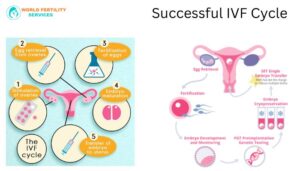
Successful IVF Cycle
Let’s begin by evaluating the graph below, 50 per cent of women who were between 25 to 31 years old have more chances to get pregnant in the one simulated IVF cycle. If you passed the maximum age for IVF treatment, then you have to do multiple IVF Cycle as per the doctor’s concern.
This measurement is known as the cumulative birth rate. In the other conversation, 3 to 4 cycles of IVF are maximum, but some infertility couples try more than 3 cycles for getting successful outcomes. Couples must jump on the other treatment instead of IVF treatment.
What Are The Biggest Risks Of IVF Treatment? – Cons Of IVF Treatment
Cons Of IVF Treatment
Despite being a popular and successful reproductive therapy, in vitro fertilization (IVF) has some hazards. The following are the biggest risks:
Several births and pregnancies:
The likelihood of twins, triplets, or more is increased if multiple embryos are transferred. This can lead to issues like low birth weight, early birth, and health hazards for both the mother and the unborn child.
OHSS, or ovarian hyperstimulation syndrome:
This happens when ovaries are overstimulated by reproductive drugs, which leads to their swelling and fluid buildup. Mild bloating, excruciating discomfort, nausea, and, in rare instances, potentially fatal consequences are among the symptoms.
Stress on an emotional and psychological level:
Because of the physical difficulties, financial expenses, and uncertainty of outcome, the process can be emotionally exhausting and frequently results in stress, anxiety, or despair.
Ectopic Pregnancy:
The embryo may occasionally implant outside the uterus, usually in the fallopian tube, which is a medical emergency that needs to be treated.
Birth Defects and Offspring Health Risks:
Although the overall risk is modest, some research indicates that babies conceived by IVF may have a slightly higher likelihood of birth defects or genetic abnormalities.
Retrieval Issues with Eggs:
Although they are uncommon, minor dangers associated with the egg collection process include hemorrhage, infection, and harm to nearby organs.
Financial Strain:
The high cost of IVF treatment, especially if multiple IVF cycles are required, might be a significant burden for infertility couples.
In the culmination, In Vitro Fertilization is a life changing treatment for infertility couples who aren’t able to conceive a baby naturally. Most of the couples try to conceive again, and again, but they have empty hands every time due to low conceiving power in any parent whether it is a female or male.
Whose Eggs Or Sperm Is Used In IVF Treatment? – IVF Treatment With Same Parents
Depending on the unique circumstances of the intended parents, several sources of eggs and sperm may be utilized in the In Vitro Fertilization (IVF) procedure. If both spouses are able to produce viable reproductive material, the IVF couple’s eggs and sperm are usually used.
However, donor eggs might be used if the female spouse is unable to generate quality eggs because of things like age or health issues. Similarly, if the intended parent is a single woman or a member of a same-sex female relationship, or if the male partner has serious reproductive problems, donor sperm may be an alternative.
What Kind Of Sperm Is Needed For IVF Treatment? – Quality Of Sperm For Fertility
To increase the likelihood of successful fertilization, high-quality sperm are necessary for In Vitro Fertilization (IVF) treatments. Sperm must fulfill specific requirements, such as sufficient morphology (normal shape and structure), concentration (sperm count), and motility (movement).
Advanced methods like Intracytoplasmic Sperm Injection (ICSI), which avoid problems like low motility or poor morphology by injecting a single healthy sperm straight into an egg, can be employed even if the sperm quality is substandard. If viable, sperm can be obtained from the male partner; if not, they can be obtained from a donor in situations involving severe male infertility, genetic issues, or for same-sex couples and single women.
What Do And Don’t Of IVF Pregnancy? – How To Keep Yourself During Pregnancy
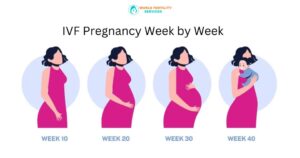
IVF Pregnancy
During the IVF treatment or during the pregnancy period mothers should consider doing, and don’t do things to get better outcomes for both mother, and child. On the other hand, initially we’ll discuss the do’s side in which you have to follow the doctor’s advice, take prescribed such as intake progesterone, and prenatal vitamins, eat a balanced diet, and stay hydrated. In the manner of this, you can also do yoga if your fertility doctor approves to do that.
In contrast, which side you should avoid, for instance, alcohol, smoking, and recreational drugs, and intake limited caffeine in the body. Never stop taking your prescription drugs or self-medicate without first talking to your doctor. You should also report any odd symptoms, such as cramping or bleeding, right away. A successful IVF pregnancy is facilitated by creating a friendly and healthy atmosphere by adhering to these criteria.
Do IVF Babies Look Like Their Parents? – Select Your Baby Gender In Some Countries
If the parents’ genetic material eggs and sperm is used in the IVF procedure, the offspring may resemble their parents. Since a baby’s genetic composition is based on the DNA inherited from its biological parents, physical characteristics like height, eye and hair color, and facial features usually mirror those of the parents.
The child will instead receive the donor’s genetic characteristics if donated eggs, sperm, or embryos are used. Through upbringing and common experiences, the infant can develop strong familial ties even though they may not physically resemble the non-genetic parent. In the end, the source of the genetic material used during the procedure determines whether an IVF kid looks like their parents.
Final Verdict – 5 Stages Of IVF Treatment
Let’s determine the essential points that we have considered in the whole article, you may check out the necessary information about IVF treatment. Our IVF Clinic also provides other fertility options such as surrogacy, IVF, PGT, and egg or sperm donation service as per couple requirement. Now, here we have dropped our website for example, www.worldfertilityservices.com where you can quest for the latest or updated articles on the medical related.
An IVF cycle generally takes about 4 to 6 weeks. The process of IVF starts with medications that help in producing eggs over 8 to 14 days. Afterwards, eggs are collected in a single day, fertilised in the lab for 5 to 6 days, and then there is a 2-week wait to determine pregnancy status.
Most individuals report that IVF is uncomfortable rather than painful. Hormonal injections may result in mild pain. The egg retrieval process starts after the shot of Anesthesia so that there is no pain, and some people feel a little cramp afterwards. The process of transfer embryo is painless, similar to a routine checkup.
The likelihood of IVF success depends on factors such as age, embryo quality, and the clinic’s proficiency. The success rates are approximately 40 to 50% for individuals under 35, 30 to 40% for those aged 35 to 37, 20 to 30% for ages 38 to 40, and 10 to 15% for those over 40. The use of donor eggs or tested embryos can significantly improve success rates.
In the IVF procedure, multiple sperm are placed with each egg to promote natural fertilisation. In contrast, ICSI involves the direct injection of a single sperm into an egg. ICSI is particularly useful in cases of low sperm quality or previous IVF failures.
Most individuals are able to continue their work during the IVF process. You will need to visit the clinic every 2 to 3 days, usually in the morning. It is recommended to take one day off for the egg retrieval. After the embryo transfer, a light rest period of 1 to 2 days is typically adequate.
No, it does not guarantee success on the first attempt. Approximately 30 to 40% of success results in their first attempt. The chances of success in multiple cycles go up to 70%. If an attempt fails, doctors will assess and modify the treatment to improve future outcomes.

Devender Gill is an experienced medical blogger & writer on the healthcare researcher with a strong focus on numerous treatments based on the official info from clinics aross network. He Specializes in creating accurate, easy-to-understand medical content covering, medical topics, for instance, IVF, Surrogacy, IUI, ICSI, and other essential ones.
Table of Contents

 WhatsApp us