
Natural IVF cycles usually have a success rate of 10% to 15% per cycle, depending on the patient’s age and general fertility health. Instead of using strong hormonal stimulation to create several eggs, natural IVF is a less invasive method that depends on one egg being naturally selected during a woman’s menstrual cycle.
The chances of success are often lower because fewer eggs are extracted, which limits the number of embryos available for fertilization and transfer, even if this approach is less expensive than traditional IVF and lowers the risks associated with ovarian hyperstimulation syndrome (OHSS).
The natural IVF Cycle success rates of may be marginally greater for younger women with regular ovulation cycles and a healthy ovarian reserve. However, the likelihood of success is lower for women over 35 or those with certain reproductive issues. Patients who are considering natural IVF should speak with a reproductive doctor to determine whether it is the best course of action for their unique situation.
What Are The Advantages Of Natural IVF Cycle Success Rate?
Compared to standard IVF, the benefits of a natural IVF cycle include simplicity, less medical intervention, and fewer expenses. Instead of using large dosages of hormonal drugs, the goal of a natural IVF cycle is to extract the one egg that the body naturally selects during a woman’s menstrual cycle. By using this method, the likelihood of ovarian hyperstimulation syndrome (OHSS) and other adverse consequences from hormone injections is reduced.
Because it makes use of the body’s natural mechanism, natural IVF is especially advantageous for women who have limited ovarian reserve or who do not respond well to hormonal stimulation. Additionally, many patients find the surgery to be less emotionally and physically taxing due to the decreased need for drugs. Additionally, it is a less expensive choice.
Can You Do IVF With A Natural Cycle?
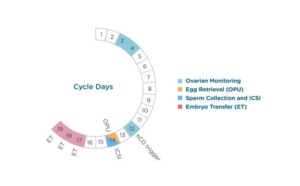
As an alternative to traditional IVF, it is possible to perform IVF using a natural cycle. IVF in a natural cycle uses little to no fertility drugs to stimulate the ovaries. Rather, the procedure concentrates on obtaining the lone egg naturally generated over a woman’s menstrual cycle. The resulting embryo is then returned to the uterus after fertilizing the egg in a lab. The natural cycle Women who have regular ovulation cycles, are responsive to fertility drugs, or have a poor ovarian reserve—where only one or two eggs may be accessible regardless of stimulation—are especially good candidates for IVF. In comparison to traditional IVF, it has a decreased risk of ovarian hyperstimulation syndrome (OHSS), fewer side effects, and lower expenses.
However, success rates may be impacted because there is a decreased probability of producing a viable embryo since fewer eggs are recovered. To find out if natural cycle IVF is a good fit for their medical condition and reproductive objectives, women who are thinking about it should speak with a fertility doctor.
Which Cycle Of IVF Is Most Successful?
Individual factors like the woman’s age, the quality of her eggs, the health of her sperm, and the underlying cause of her infertility can all affect how well an IVF cycle goes. For most couples, the first two or three IVF rounds are thought to be the most effective.
According to studies, the cumulative success rate rises with each extra cycle, so even if the first cycle doesn’t work out, a healthy pregnancy could still result from later cycles. Because their eggs are of superior quality, younger women (those under 35) usually have higher success rates in the early cycles. Cycles including methods like donor egg use or preimplantation genetic testing (PGT) may increase success for older women or those with reproductive issues.
Every IVF doctors in India gives important information on how the body reacts to therapy, enabling them to make the necessary corrections for subsequent cycles. The likelihood of success for any given cycle can be increased by speaking with a fertility professional to customize the protocol to the needs of the person.
What Is The Success Rate Of IVF ?
1. Natural IVF Success Rate by Age Group
|
Age Group |
Success Rate Per Cycle |
Egg Quality |
Cancellation Risk |
Key Reason |
Best Approach |
|
25–30 years |
15–20% |
Excellent |
Low |
In peak reproductive years, eggs are healthiest and most viable. |
Natural IVF works very well and is a strong option. |
|
31 to 35 years |
12–18% |
Very Good |
Low to moderate |
Egg quality remains strong, and ovarian reserve is usually sufficient. |
Natural IVF or Modified Natural IVF are both suitable. |
|
36–38 years |
10–14% |
Good to Fair |
Moderate |
Egg quality begins to decrease gradually with age. |
Modified Natural IVF is often preferred for better cycle control. |
|
39–40 years |
8–12% |
Fair |
Moderate to High |
Ovarian reserve decreases, and fewer eggs are normal. |
It is recommended that multiple cycles may be needed. |
|
41–42 years |
5–10% |
Fair to Poor |
High |
Age-related decline in egg quality and embryo viability. |
Natural IVF is still possible, but donor eggs may be required |
|
43+ years |
2–5% |
Poor |
Very High |
A very limited number of viable eggs are produced |
Conventional IVF or donor egg IVF is often recommended. |
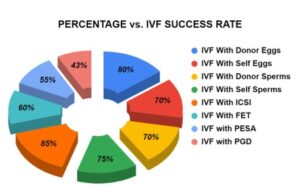
Depending on personal characteristics including general health, ovarian reserve, and egg quality, the success rate of IVF for women over 40 usually varies between 5% and 10% per round. Fertilization and embryo development are impacted by the normal decrease in egg quantity and quality that occurs as women age.
One of the main causes of the lower IVF success rates in India, this age group is this decline. Many women over 40 use assisted reproductive methods, such as preimplantation genetic testing (PGT) or intracytoplasmic sperm injection (ICSI), to increase the likelihood of successful transfer of viable embryos. Additionally, some could think about using donor eggs, which can greatly raise success rates to 50% or more per cycle.
Working together with a fertility professional to develop a personalized treatment plan is crucial for women in this age range. The likelihood of a successful pregnancy can be increased with the use of cutting-edge reproductive procedures and early intervention.
2. Natural IVF Cost Comparison
|
Country |
Natural IVF Cost, Per Cycle |
Modified Natural IVF Cost |
Conventional IVF Cost |
How much you Save vs Conventional |
|
India |
₹30,000 – ₹60,000 |
₹50,000 – ₹80,000 |
₹1,20,000 – ₹2,50,000 |
Save up to 75–80% |
|
Thailand |
$1,000 – $2,000 |
$1,500 – $2,500 |
$4,000 – $7,000 |
Save up to 70% |
|
Turkey |
$800 – $1,500 |
$1,200 – $2,000 |
$3,000 – $5,500 |
Save up to 72% |
|
United Kingdom (UK) |
£2,500 – £4,000 |
£3,000 – £4,500 |
£5,000 – £8,000 |
Save up to 50% |
|
United States (USA) |
$3,000 – $5,000 |
$4,000 – $6,000 |
$12,000 – $20,000 |
Save up to 75% |
|
Ukraine |
$600 – $1,200 |
$900 – $1,500 |
$2,500 – $4,500 |
Save up to 73% |
How Many Natural IVF Cycles Are Needed
The Natural IVF cycles depend on the age and situation of the patients; different ages vary the cycle. Now, you can check the information regarding ivf cycle
Cycles Needed by Age & Situation:
|
Patient Profile |
Average Cycles Needed |
Cumulative Success Rate |
Recommended Strategy |
|
Woman under 35 with healthy ovarian reserve |
2–4 cycles |
40–60% by cycle 4 |
Start with Natural IVF and reassess after 4 cycles. |
|
Woman aged 35–38 with good ovarian reserve |
3–5 cycles |
35–50% by cycle 5 |
Natural IVF or Modified Natural IVF; monitor progress closely. |
|
Woman aged 38–40 with declining ovarian reserve |
4–6 cycles |
25–40% by cycle 6 |
Modified Natural IVF is preferred; consider PGT after cycle 3. |
|
Woman aged 40–42 with low ovarian reserve |
5–8 cycles |
15–30% cumulative |
Discuss donor eggs after 5–6 unsuccessful cycles. |
|
Poor responder to conventional IVF |
3–5 cycles |
20–35% cumulative |
Natural IVF may work well when conventional IVF has failed. |
|
Previous history of OHSS |
3–6 cycles |
30–45% cumulative |
Natural IVF is the safest option and avoids ovarian overstimulation. |
Natural vs. Modified Natural IVF Cycle –
We can know about these IVF cycles with the help of a detailed table, so if you want to know about the natural and modified natural IVF cycle so you are at the right place to get the authentic information.
|
Comparison Point |
Natural IVF |
Modified Natural IVF |
|
In Simple Words |
Your body does everything naturally. No drugs are used. Doctors collect the one egg your body produces that month. |
Mostly natural, but 1 or 2 mild medications are added to improve timing and stop the egg from releasing too early. |
|
Think of It Like |
It’s just like picking the one apple a tree naturally grows this season, no fertiliser, no extra help. |
Same apple tree, but you add a small protection like a net, so the apple does not fall before you are ready to pick it. |
|
Medications Used |
None at all, no injections and no pills. |
1 to 2 mild drugs, usually take an injection and medicine to prevent premature ovulation. |
|
Eggs Collected |
Just 1 egg, the one your body naturally selected. |
Still 1 egg, but collected the best and most controlled time. |
|
Clinic Visits |
Regular monitoring to track natural hormone levels closely. |
Similar visits, but timing is more predictable and easier to schedule. |
|
Risk of Cycle Cancellation |
The higher the egg may be released before doctors can collect it. |
Lower medication helps prevent early egg release. |
|
Physical Side Effects |
Almost none. No bloating, mood swings, or injection discomfort. |
Very mild, slight soreness at the injection site at most. |
|
OHSS Risk |
Zero. No ovarian stimulation drugs are used. |
Still zero. The mild medications do not overstimulate the ovaries. |
|
Emotional Experience |
Low stress overall, but some worry about whether the egg will be collected in time. |
More predictable scheduling, which many patients find reassuring. |
|
Success Rate Per Cycle |
Around 7 to 15% per attempt. |
Around 10 to 20% per attempt. |
|
Cost |
Most affordable IVF option because there are no medication costs. |
Very affordable and only slightly more expensive than Natural IVF. |
|
How Many Cycles Are Needed? |
Multiple cycles are often needed as this is a gentle, repeated approach. |
Similarly, but fewer cancelled cycles mean fewer wasted attempts. |
|
Best Suited For |
Women who want zero medication poor responders to hormones; women with regular cycles; repeated conventionl IVF failures; medical conditions preventing hormone use. |
When she wants a natural approach with better reliability, low ovarian reserve, previous cancelled Natural IVF cycles; patients wanting predictable scheduling; a good first step before conventional IVF. |
|
Not Ideal For |
Irregular cycles, women seeking faster results, or advanced age with very low egg reserve. |
Women who cannot take any medication or those expecting multiple embryos per cycle. |
Which Month Is Good For IVF Treatment?
Since the effectiveness of IVF is mostly dependent on the woman’s age, general health, ovarian reserve, and the clinic’s level of experience, there is no one “best” month for the procedure. However, depending on their schedules, preferred climates, or emotional preparedness, some couples would rather begin IVF during specific months.
For instance, some people may find cooler months more comfortable because they experience less physical strain from the heat, particularly in warmer climates. Furthermore, some months might fit in better with lifestyle considerations, such as fewer work obligations, adequate rest, and treatment attention.
Ultimately, the best time for IVF is when the individual or couple feels physically, emotionally, and financially prepared. Consulting with a fertility specialist to align the treatment schedule with the woman’s menstrual cycle and other health factors is crucial for optimizing success rates.
Final Wording – Natural IVF Cycle Success Rate
We declare all essential points in the upper case of the content, now you have to read all significant elements that will assist to enhance the chances of success rate in your infertility treatment to conceive a baby naturally. We also recommend you grab the best IVF clinic in India, for instance, www.worldfertilityservices.com where you can find the latest updated articles to increase your medical knowledge to understand how IVF treatment is performed in India. We’re glad to provide all to share with you.
Frequently Asked Questions – Natural IVF Cycle
Do doctors freeze embryos in natural IVF Cycles?
Doctors can freeze embryos from natural IVF cycles, but it totally depends on the quality and development of each embryo. When it comes to the freezing of eggs, experts say natural IVF means less quantity of eggs, so you will not always get embryos that are not good enough to freeze every time.
How many cycles are safe and recommended to get Pregnant?
Yes, it is safe to go multiple IVF cycles, but most of the time, doctors recommend around three to six natural IVF cycles. That is the ideal range, and it helps to enhance your chances of getting pregnant without the risks of overstimulation. As a patient goes under multiple cycles, you can collect more embryos, which usually helps you to get a higher chance of pregnancy.

Devender Gill is an experienced medical blogger & writer on the healthcare researcher with a strong focus on numerous treatments based on the official info from clinics aross network. He Specializes in creating accurate, easy-to-understand medical content covering, medical topics, for instance, IVF, Surrogacy, IUI, ICSI, and other essential ones.
Table of Contents
 WhatsApp us