
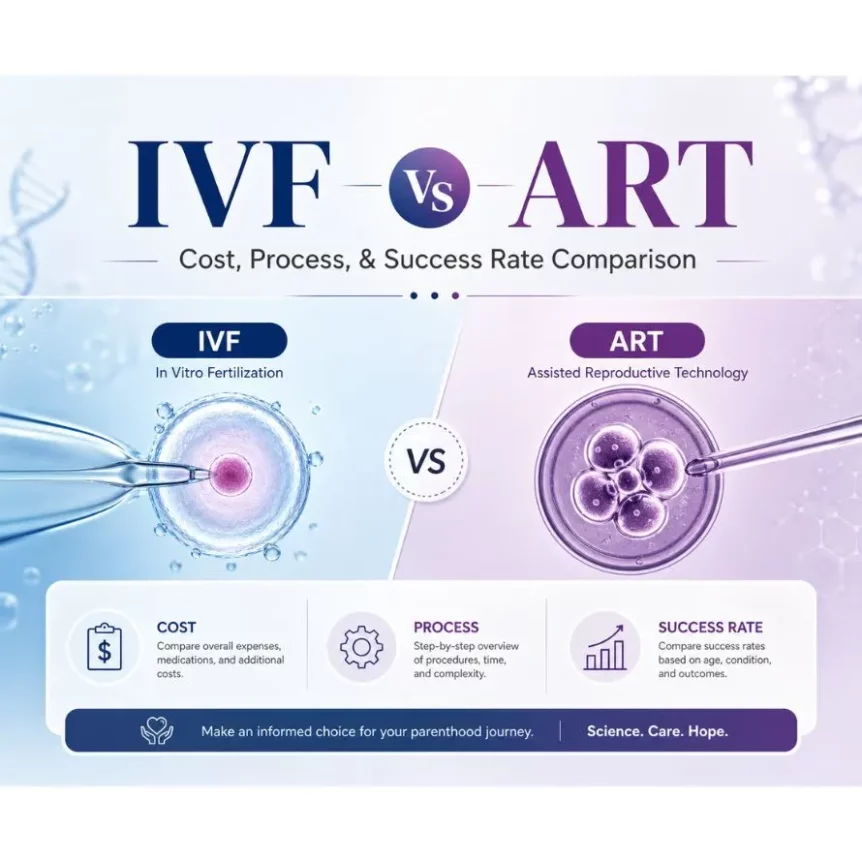
Infertility hits hard. It stirs up dreams of family and leaves couples lost in a maze of medical terms. You might hear “ART” thrown around, but then IVF pops up everywhere. What’s the real difference? Let’ beacon on the comparison between IVF vs ART with high success rate for both international or domestic patients.
This article breaks it down. It compares Assisted Reproductive Technology (ART) as a whole with In Vitro Fertilization (IVF) as the top choice. You’ll get clear facts to help pick the best path for your journey.
Understanding Assisted Reproductive Technology (ART): The Umbrella Term
ART covers a wide range of fertility help. It includes any treatment where doctors handle eggs and sperm outside the body. This group helps track results and guide patients like you.
Think of ART as a big tent. It shelters many tools to build a family when nature needs a boost.
Defining ART Procedures Beyond IVF
IVF gets all the buzz, but ART includes more. Take Intracytoplasmic Sperm Injection, or ICSI. Here, a single sperm gets injected right into an egg. This fixes low sperm count or movement issues.
Then there’s Gamete Intrafallopian Transfer, called GIFT. Eggs and sperm go straight into the fallopian tubes. Fertilization happens inside the body, not in a lab dish.
Zygote Intrafallopian Transfer, or ZIFT, follows a similar idea. Doctors fertilize eggs in the lab first. They place the zygote, an early embryo, into the tube.
These count as ART because they all move gametes outside for handling. That key step sets them apart from simpler options like timed intercourse.
Regulatory Framework and Reporting Standards
Groups like the CDC in the US watch over ART. They require clinics to report every cycle. This builds a national database on outcomes.
Success rates show live births per cycle started. In 2024, over 326,000 ART cycles happened in the US, per CDC data. IVF made up most of them.
These reports lump all ART together. But IVF stats stand out since it’s the go-to method. You can check the Society for Assisted Reproductive Technology (SART) site for clinic-specific numbers. It helps spot top performers.
In Vitro Fertilization (IVF): The Cornerstone of Modern Fertility Care
IVF leads the pack in fertility care. It’s the star under the ART umbrella. Most couples know it from stories of success after struggles.
The process starts with hormone shots to grow multiple eggs. You visit the clinic for monitoring. Then, a quick procedure pulls the eggs out.
Next, sperm meets eggs in a dish. Embryos form over days. Doctors pick the best one or two for transfer into the uterus.
A blood test two weeks later checks if pregnancy took hold. It’s a mix of science and hope.
Variations and Modifications of Standard IVF
Standard IVF adapts to your needs. Donor eggs help if yours don’t work well. Donor sperm steps in for male issues.
Frozen Embryo Transfer, or FET, uses embryos saved from past cycles. It skips fresh egg retrieval. This cuts hormone effects and boosts odds in some cases.
Preimplantation Genetic Testing, PGT, screens embryos for issues. It spots gene problems before transfer. This step raises success and lowers risks like miscarriage.
PGT adds time and money. But it tailors IVF to your health history.
Success Rates: Analyzing IVF-Specific Data
IVF success varies a lot. Age plays a big role. Women under 35 see about 50% live birth rates per cycle, based on 2024 SART reports.
Causes matter too. Blocked tubes favor IVF well. Endometriosis might need tweaks.
Clinic skill counts. Pick one with high volume. They handle cases better.
Don’t chase raw numbers alone. Ask how they match your age and issue. Live birth rates beat just pregnancy stats.
The Critical Distinction: ART vs. IVF Explained
ART is the big picture. IVF is one key piece inside it. All IVF counts as ART. But ART goes beyond IVF to other methods.
Picture ART as a toolbox. IVF is the hammer you use most. Other tools fit special jobs.
This mix-up confuses folks. Clear it up to choose wisely.
When ART Procedures Diverge from Standard IVF
IVF fertilizes in a lab dish. That’s its hallmark.
ICSI changes that a bit. It injects sperm directly during IVF. It helps when sperm won’t swim or bind on their own. Most IVF cycles with male problems add ICSI.
GIFT and ZIFT feel old-school now. They mix lab and body work. GIFT skips the dish for fertilization. ZIFT uses it briefly.
These see less use today. IVF proves simpler and safer. Clinics favor it for better control.
Impact on Treatment Selection and Diagnosis
Your doctor picks based on tests. Low sperm motility? ICSI in IVF fits.
For blocked tubes, standard IVF shines. No need for GIFT.
Imagine Sarah. Her IUI failed twice. Tests show poor egg quality. She jumps to IVF with donor eggs—an ART path.
Now take Mike and Lisa. Sperm issues block natural tries. They get IVF with ICSI. It’s ART tailored to them.
Diagnosis drives the choice. It skips guesswork.
Financial Implications and Insurance Coverage
ART and IVF cost a bundle. One cycle can run $12,000 to $15,000. Add-ons push it higher.
Insurance helps some. But rules differ by state and plan. Coverage often tags IVF but skips rare ART like ZIFT.
Plan ahead. Costs add up fast.
Cost Breakdown Comparison
A full IVF cycle averages $14,000. That covers retrieval, lab work, and transfer.
ICSI adds $1,000 to $2,000. It’s a common IVF boost.
Medications hit $3,000 to $5,000 per cycle. They’re the hidden drag.
PGT runs $3,000 extra. Embryo freezing and storage? Another $500 yearly.
Other ART like GIFT might match IVF costs. But fewer clinics offer them. That limits options.
Navigating Insurance and Financial Planning for ART
Check your policy first. Call the insurer. Ask: Does it cover IVF cycles? What about ICSI or PGT?
Some states mandate fertility benefits. Like New York or California. They cap age and tries.
If no coverage, look at grants. Groups like Resolve help. Loans or clinic payment plans ease the load.
Track every expense. Tax deductions might apply for medical costs.
Making the Informed Decision: Choosing Your ART Pathway
You hold the reins here. Talk to experts. Weigh your options.
Personal fit beats trends. Your body, your call.
Consulting with a Specialist: Key Questions to Ask
Find a reproductive endocrinologist. They know ART inside out.
Ask these:
- How many cycles do you do yearly for my issue?
- What’s your live birth rate for women my age?
- Do you offer ICSI or PGT? How does it change my odds?
- Can I see your SART report?
Push for details. It builds trust.
Also query: “What ART fits my diagnosis best? Why not IVF?”
Lifestyle Factors Influencing ART Outcomes
Your habits matter. Quit smoking. It harms eggs and sperm.
Eat balanced meals. Folate and omega-3s support fertility.
Cut stress. Yoga or walks help. Studies show it aids implantation.
Partner up on health. Both need check-ups.
Start changes three months before. It preps your body.
Conclusion: Clarity in Complex Fertility Journeys
ART is the broad field of outside-body fertility aids. IVF stands as the main tool in that kit. Not all ART means IVF, but IVF always means ART.
Focus on your unique case. Skip label confusion. Let diagnosis guide you.
Seek a specialist soon. They map the best route. With info and care, your family dream gets closer. Take that first step today.

Devender Gill is an experienced medical blogger & writer on the healthcare researcher with a strong focus on numerous treatments based on the official info from clinics aross network. He Specializes in creating accurate, easy-to-understand medical content covering, medical topics, for instance, IVF, Surrogacy, IUI, ICSI, and other essential ones.
Table of Contents

 WhatsApp us