
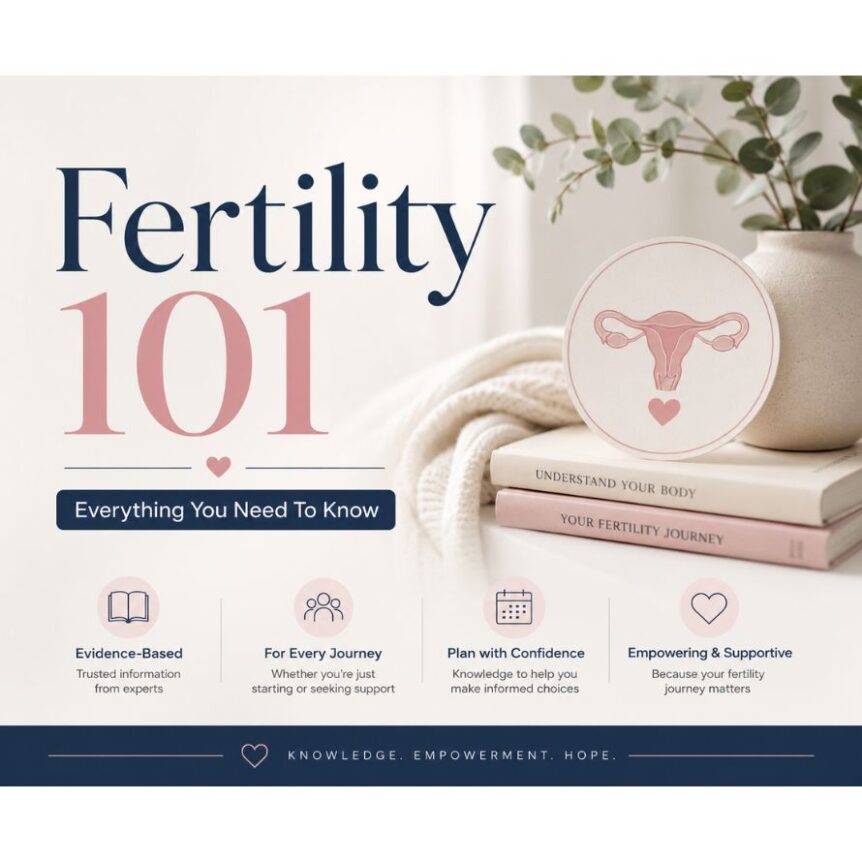
Deciding to start a family is one of the most exciting choices you will make. It can also bring a sense of pressure. You might wonder if you are doing everything right or if you are missing key windows.
Fertility 101 / Education – Everything You Need To Know
Learn the essential aspects of fertility, reproductive health, conception, and fertility treatments through this educational guide.
| Fertility Topic | Description | Why It Matters |
|---|---|---|
| Ovulation | Ovulation is the natural process where the ovary releases an egg during the menstrual cycle. | Tracking ovulation helps identify the most fertile days for conception. |
| Hormonal Balance | Hormones regulate menstrual cycles, egg quality, sperm production, and reproductive health. | Balanced hormones are essential for healthy fertility and pregnancy. |
| Healthy Lifestyle | Diet, exercise, sleep, hydration, and stress management strongly affect fertility outcomes. | Healthy habits can improve reproductive wellness naturally. |
| Age & Fertility | Fertility gradually declines with age, especially after the age of 35. | Understanding age-related fertility helps with family planning decisions. |
| Male Fertility | Sperm count, motility, and morphology play a major role in conception success. | Male fertility is equally important in reproductive health. |
| Fertility Treatments | IVF, IUI, fertility medications, and advanced reproductive techniques support conception. | Fertility treatments provide solutions for infertility challenges. |
This guide breaks down the science of fertility 101 / Education into simple steps. You will learn the basics of conception to help you feel more confident about this life event.
Understanding The Basics – Female Fertility Fundamentals – Fertility 101

Understanding The Basics Female Fertility Fundamentals
Your menstrual cycle is the heartbeat of your fertility. It is not just about your period; it is a complex process that repeats every month to prepare your body for a potential pregnancy.
Decoding The Menstrual Cycle & Ovulation – IVF Procedure In India
The cycle consists of three main phases: the follicular phase, ovulation, and the luteal phase. Ovulation is the main event where your ovary releases a mature egg. This egg only lives for about 12 to 24 hours. Because of this, knowing your fertile window is vital.
The fertile window includes the day of ovulation and the five days before it. Sperm can live inside the female body for up to five days. If you have sperm present when the egg drops, your chances of conception increase.
- Calendar Method: Track the length of your cycles for a few months to find your average fertile days.
- Basal Body Temperature: Use a special thermometer to take your temp first thing every morning. A slight spike happens right after ovulation.
The Role Of Egg Quality & Quantity Over Time During IVF In Clinic
Women are born with all the eggs they will ever have. Over time, both the number and the quality of these eggs naturally decline. This process speeds up after age 35. This does not mean you cannot conceive later, but it does mean your eggs become less resilient. Keeping a healthy lifestyle can help support the quality of the eggs you have left.
Common Obstacles To Timely Conception – IVF Success Rate
Many factors can make it harder to conceive. Some common issues include:
- Anovulation: This is when ovulation does not happen regularly.
- PCOS (Polycystic Ovary Syndrome): A hormonal imbalance that can disrupt the cycle.
- Endometriosis: A condition where tissue similar to the lining of the uterus grows outside it.
If you have irregular periods, talk to your doctor early. Early detection makes a big difference in treatment success.
Beacon On The Optimizing Male Fertility Health With Accessible Cost

Beacon On The Optimizing Male Infertility Health With Accessible Cost
Men often overlook their own health when trying to conceive, but male factors play a part in nearly half of all cases. Focusing on your health is a great way to boost your odds.
Sperm Health: Beyond Just Count
Sperm analysis looks at three main areas to judge health. These are count, movement, and shape.
- Count: The total number of sperm in a sample.
- Motility: How well the sperm swim toward the egg.
- Morphology: The shape and structure of the sperm.
Recent studies, such as the 2017 research by Dr. Hagai Levine, show that sperm counts in Western countries have dropped by over 50 percent in the last 40 years. This makes lifestyle changes even more important today.
Lifestyle Factors That Impact Sperm Production
Sperm are very sensitive to heat and toxins. Your testicles sit outside your body for a reason: they need to stay cooler than the rest of you.
- Avoid Heat: Skip saunas, hot tubs, and long, hot baths.
- Dress Smart: Wear loose-fitting underwear. Tight boxers can raise the temperature of the scrotum and lower sperm quality.
- Limit Toxins: Smoking and too much alcohol can damage sperm DNA and lower count.
The Importance Of Nutrition & Supplements For Him – IVF In The World
What you eat affects your sperm health directly. A balanced diet full of fruits and vegetables is a good start. Specific nutrients also help boost sperm health:
- Zinc: Vital for sperm production.
- Folate: Helps maintain proper sperm structure.
- CoQ10: An antioxidant that helps with energy for sperm movement.
Talk to your doctor before adding supplements to your routine to ensure they are right for you.
The Crucial Timing: Maximizing Intercourse Frequency – IVF Clinics In The World
The timing of intercourse is the most critical part of the process. You want to match sperm presence with the release of the egg.
Pinpointing The Fertile Window Accurately With Experienced Doctors
Calendar tracking is a good start, but watching your body is better. Cervical mucus is a clear sign of fertility. When you see mucus that looks like raw egg whites, you are at your peak fertility. This mucus helps sperm swim and stay alive longer.
A fertility doctor might describe this change in mucus as the clearest sign of the “fertile window.” When you see this, prioritize intercourse over the next few days.
How Often Is Optimal? Frequency Vs. Quality In IVF Procedure?
How often is optimal?
There is a myth that men should “save up” sperm for days to make it more potent. This is false. Daily or every-other-day intercourse during your fertile window keeps a fresh supply of sperm in the reproductive tract. This is more effective than abstaining for long periods.
Debunking Common Intercourse Myths
- Positions: No specific position helps sperm reach the egg better than others.
- Waiting Times: You do not need to lay with your legs up after sex. Sperm can enter the cervix within seconds.
- Lubricants: Most standard lubes kill sperm. Look for brands clearly labeled as “sperm-friendly” or “fertility-friendly.”
Preconcpetion Health – Preparing The Body Before Procedure – IVF Agencies In India
Preparing for a baby starts months before you actually get pregnant. You want your body to be in the best shape to grow a human.
Essential Preconcpetion Screening & Check-Ups
Both partners should visit their doctor before stopping birth control. Your doctor can review your current medications to ensure they are safe for pregnancy. They will also look for any chronic health conditions that might need management, such as thyroid issues or diabetes.
The Non-Negotiable Role Of Prenatal Vitamins & Folic Acid
You should start taking a prenatal vitamin at least one month before you try to conceive. Folic acid is the most important ingredient. It helps prevent neural tube defects in the baby, which are serious brain and spine issues. Aim for at least 400 to 800 micrograms of folic acid daily.
Stress Management & Mental Well-Being
Trying to conceive can be stressful, but stress hormones like cortisol can affect your reproductive hormones. High stress levels may delay ovulation or lower sex drive. Find simple ways to reduce stress, such as light exercise, meditation, or spending time outdoors. Managing your mental health is a form of physical prep.
When To Seek Professional Guidance? – Recognizing Infertility In Both Genders
Sometimes, despite your best efforts, pregnancy does not happen on the expected timeline. You need to know when to ask for help.
Standard Timeframes For Seeking Evaluation
The standard timeline is based on age:
- Under Age 35: Seek advice after one year of regular, unprotected intercourse.
- Age 35 and Older: Seek advice after six months of trying.
If you are 40 or older, it is often best to see a specialist right away.
Recognizing Red Flags That Warrant Immediate Consultation
Do not wait for the clock to run out if you have clear red flags. See a doctor sooner if:
- You have very irregular or absent periods.
- You have a known history of pelvic inflammatory disease.
- The male partner has a history of testicular injury, surgery, or low sperm count issues.
An Overview Of Inital Fertility Testing – Egg Donor With IVF
Doctors start with simple tests. For women, this includes Day 3 bloodwork to check hormones like FSH and AMH, which show egg supply. They may also use an HSG, a specialized X-ray, to check if your fallopian tubes are open. For men, a standard semen analysis is the first step to checking count and motility.
Final Wording – Fertility 101 / Education
Most couples conceive within the first year of trying. If it takes a little longer, it does not mean you have failed. The process requires patience and a good amount of teamwork.
Both partners must participate in health changes and appointments. Taking care of your body and mind is the best thing you can do for your future baby. Lean on each other, stay informed, and remember that this is a shared goal. You are on the same team, and that partnership is your greatest strength.

Devender Gill is an experienced medical blogger & writer on the healthcare researcher with a strong focus on numerous treatments based on the official info from clinics aross network. He Specializes in creating accurate, easy-to-understand medical content covering, medical topics, for instance, IVF, Surrogacy, IUI, ICSI, and other essential ones.
Table of Contents
 WhatsApp us