
Facing infertility hits hard, especially when tests show no sperm in the ejaculate. You might feel stuck, but options like in vitro fertilization (IVF) offer real paths forward for many couples. Azoospermia, the complete lack of sperm in semen, affects about 1% of men and up to 15% of those seeking fertility help.
Azoospermia & IVF Success Rates For Patients
Explore IVF treatment success rates for different types of azoospermia and find the right fertility solution with expert support.
| Condition Type | Description | Treatment | IVF Success Rate |
|---|---|---|---|
| Obstructive Azoospermia | Sperm production is normal but blocked from entering semen. | TESA / PESA + ICSI | 65% – 80% |
| Non-Obstructive Azoospermia | Very low or absent sperm production in testes. | Micro-TESE + ICSI | 35% – 55% |
| Genetic Azoospermia | Chromosomal or inherited fertility disorders. | Genetic IVF Treatment | 30% – 50% |
| Hormonal Azoospermia | Hormonal imbalance affecting sperm development. | Hormonal Therapy + IVF | 50% – 70% |
| Failed Sperm Retrieval | No viable sperm found during extraction procedure. | Donor Sperm IVF | 75% – 90% |
IVF steps in as a key treatment when doctors can retrieve sperm directly from the testes. This article breaks down how azoospermia ties into IVF success rates, from diagnosis to practical steps that boost your odds. Without taking more period on the minior, should we go for Azoospermia & IVF success rates to enhance the chances of pregnancy.
Diagnosing Azoospermia & Identifying Underlying In India
Diagnosing Azoospermia Identifying Underlying In India
Types Of Azoospermia – Obstructive Vs. Non- Obstructive
Azoospermia comes in two main forms, and knowing which one you have changes your treatment plan. Obstructive azoospermia happens when a blockage stops sperm from reaching the ejaculate, even though your testes produce them normally. Think of past surgeries, infections, or even a vasectomy as common culprits here.
Non-obstructive azoospermia means the testes fail to make enough sperm. Conditions like Sertoli cell-only syndrome leave the tubes empty, or maturation arrest halts sperm development midway. These types guide whether IVF can work at all.
Diagnostic Procedures & Sperm Retrieval Techniques
Doctors start with a semen analysis to confirm azoospermia, then check hormone levels like FSH and testosterone. Genetic tests, such as for Y-chromosome deletions, help pinpoint causes. Imaging like ultrasound spots blockages.
For IVF, sperm retrieval becomes crucial. Testicular sperm extraction (TESE) involves a small incision to grab tissue samples from the testes. Testicular sperm aspiration (TESA) uses a needle for quicker access. Microdissection TESE (micro-TESE) offers the best shot, especially for non-obstructive cases, with success rates around 40-60% in finding usable sperm.
These methods carry low risks, like mild pain or infection, but they open doors to parenthood.
Impact Of Etiology On IVF Procedures Viability – IVF Doctors In India
The root cause of azoospermia shapes how much sperm you get and its quality. Genetic issues like Klinefelter syndrome often mean low sperm yield, making IVF tougher. A simple vasectomy reversal, though, can yield plenty of healthy sperm.
Infections or toxins might damage sperm DNA, hurting IVF results. Your doctor will weigh these factors to predict outcomes. Early diagnosis lets you target the issue, improving chances before starting IVF.
The Role Of Intracytoplasmic Sperm Injection ICSI In Azoospermia India
The Role Of Intracytoplasmic Sperm Ijection ICSI
Why ICSI Is Essential For Azoospermia IVF Cycles? – IVF Agencies In India
Standard IVF mixes eggs and sperm in a dish, but that won’t work with azoospermia since there’s no sperm to swim over. Intracytoplasmic sperm injection (ICSI) fixes this by injecting one sperm straight into an egg. You need retrieved sperm for this, but it bypasses motility problems.
Couples with azoospermia rely on ICSI for nearly all cycles. Without it, fertilization rates drop to zero. This technique has transformed male infertility treatment since the 1990s.
Sperm Quality Challenges Post-Retrieval & ICSI Efficiency
Surgically retrieved sperm often lack the maturity and movement of ejaculated ones. They come straight from the testes, so they’re immature and less lively. Still, ICSI achieves fertilization rates of 60-80%, close to the 70-90% seen with normal sperm.
Quality matters for embryo growth. Labs check sperm for viability before injection. If sperm look poor, outcomes dip, but many couples see healthy embryos anyway.
Sperm DNA Fragmentation & ICSI Outcomes Sperm
Sperm DNA fragmentation (SDF) measures breaks in genetic material, which can harm embryos. In azoospermia, especially non-obstructive, SDF rates run higher due to production issues. Tests like TUNEL assay spot this.
High SDF links to lower embryo quality and fewer live births after ICSI. Studies show SDF over 30% cuts success by 20-30%. Antioxidants or better retrieval methods might help lower it.
Calculating IVF Success Rates In Azoospermia Couples In India
Defining Success Metrics – Fertilization, Implantation, & Live IVF Birth Rates – IVF In The World
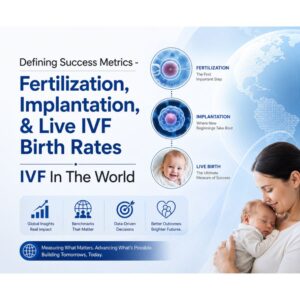
Fertilization Implantation, & Live IVF Birth Rates
Success in IVF isn’t just one number; it builds in steps. Fertilization rate tracks how many eggs get sperm to form embryos, often 70% or more with ICSI. Implantation rate shows if those embryos stick in the uterus, around 30-50% per transfer.
Live birth rate (LBR) is the real goal: a healthy baby born. For azoospermia couples, LBR per cycle hovers at 25-40%, depending on details. Track all metrics to gauge progress.
Comparative IVF Success Rate – Azoospermia Vs. Other Infertility Factors – IVF Clinics In India
Azoospermia IVF success lags a bit behind cases without male issues. Couples with normal sperm see LBRs of 40-50% per cycle under age 35. For TESE-retrieved sperm, it’s closer to 30-40%.
Non-obstructive cases fare worse than obstructive ones, with LBRs 10-15% lower. Female age trumps all: over 40, rates fall sharply for everyone. Data from clinics like those in the ESHRE registry back this up.
- Obstructive azoospermia: Higher sperm yield leads to LBRs matching tubal factor infertility.
- Non-obstructive: Success ties to how many sperm micro-TESE finds.
Factors Moderating IVF Success Following Sperm Retrieval
Your female partner’s age drives most of the outcome. Under 35, LBRs hit 40%; over 38, they drop below 20%. Ovarian reserve, measured by AMH levels, predicts egg numbers.
More mature eggs mean better odds with limited sperm. Obstructive cases often yield more viable sperm, boosting rates by 15%. Overall health, like BMI under 30, helps too.
Optimizing Outcomes – Actionable Tips For Azoospermia Patients Undergoing IVF
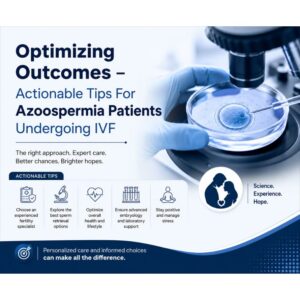
Optimizing Outcomes Actionable Tips For Azoospermia Patients Undergoing IVF
Pre-Treatment Optimization For Male Factor Improvement – Azoospermia In India
Start with lifestyle changes before sperm retrieval. Quit smoking and limit alcohol to under 14 units weekly; both harm sperm production. Eat a diet rich in antioxidants: think berries, nuts, and leafy greens.
Exercise moderately, like 30 minutes of walking daily, to balance hormones. If tests show low testosterone, your doctor might suggest meds. Supplements like coenzyme Q10 or L-carnitine could aid, but check with a specialist first.
These steps won’t cure azoospermia but can improve sperm quality if any exist.
Partner Choosing Criteria For Maximizing Egg Yield – IVF In India
For the female partner, focus on her fertility window. Choose protocols that match her age and reserve, like mild stimulation for older women to avoid over-response. Aim for 10-15 eggs per cycle to pair with scarce sperm.
Pre-IVF tests like antral follicle count guide dosing. If reserve is low, consider donor eggs for higher success, with LBRs over 50%. Tailor everything to her cycle for best results.
- Track cycles with apps to time stimulation right.
- Use embryo genetic testing if age raises risks.
Strategic Use Of Cryopreservation & Embryo Banking – IVF With Azoospermia
Freeze extra sperm after retrieval to skip repeat surgeries. Viable sperm can last years in storage, ready for future cycles. Embryo banking lets you build a stock from one egg retrieval.
This cuts costs and stress over time. Frozen transfers often match fresh LBRs, around 35%. If first cycle fails, you have backups without new procedures.
Final Wording – Azoospermia & IVF Success Rates
Azoospermia and IVF success rates depend on the cause, sperm quality, and your partner’s health. Obstructive cases offer better odds with higher retrieval success, while non-obstructive needs advanced techniques like micro-TESE and ICSI. Female age remains the biggest predictor, but optimizations like lifestyle tweaks and cryopreservation push rates toward 30-40% live births. Azoospermia, and IVF is different procedure, but assist to enhance the chances of concpetion whether the patient didn’t get success in their initial stage.
Many couples achieve their family dreams despite the hurdles. Work with a fertility specialist for a plan fit to your situation. Take that first step: schedule a consult today and turn hope into reality.

Devender Gill is an experienced medical blogger & writer on the healthcare researcher with a strong focus on numerous treatments based on the official info from clinics aross network. He Specializes in creating accurate, easy-to-understand medical content covering, medical topics, for instance, IVF, Surrogacy, IUI, ICSI, and other essential ones.
Table of Contents
 WhatsApp us