
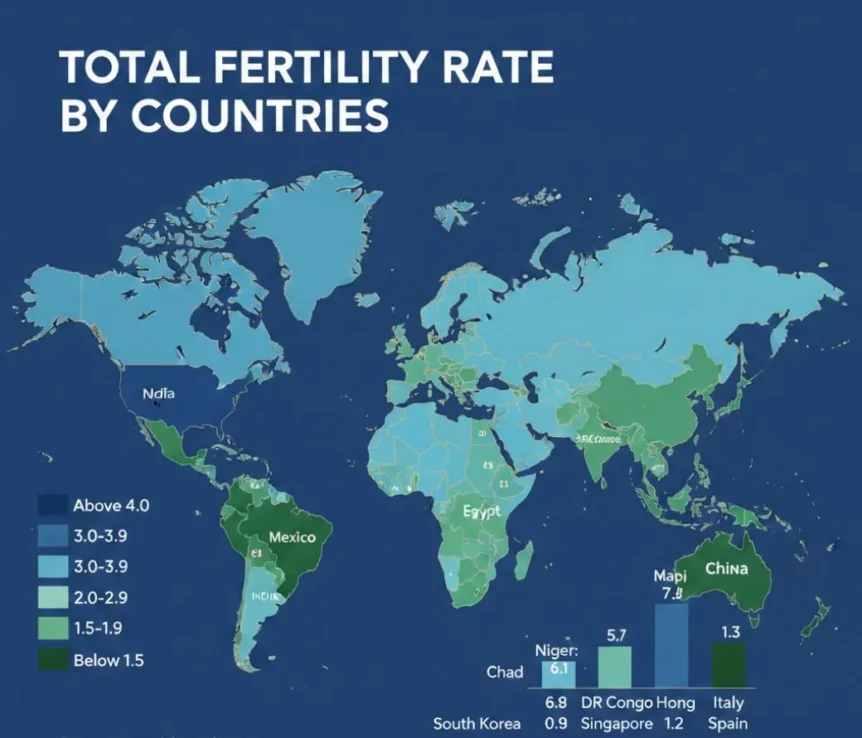
Fertility Success Rate by Country
Growing countries always welcome all those infertile couples or single parents who don’t have the ability to conceive a baby through their organs. With the incredible imagination a world is fully equipped with advanced or developed countries whereby the patient gets petition for their reproductive obstacles.
Listening to the sound of growing families with high success rates just seems like heaven for them. Therefore, here’ve go to disclose the essential topics, for instance, total fertility rate by countries in the world. To evaluate the total fertility rate, we just get in deep to deem the process, and take assistance through bigger sources, for instance, world fertility services clinic & World health organization to perform the best fertility aspects under IVF doctors in India or worldwide.
We’ll express the essential headings or paragraphs in the huge playground with a suitable illustration to recognize the actual stats with us. This content, and its components will guide to enhance the chances of conception & pregnancy with total IVF rate by countries which stands out TFR as experts call it.
TFR measures the average number of kids a woman has in her lifetime in a given destination with secureness.
Remember! The recorded numbers aren’t just on a page, it shows the disparity between matters, traditions, and reproductive health care supplies down the road. This number isn’t just stats on a page.
These gaps shape how we handle jobs, schools, and even food chain supplies down the road. In this conversation, we’ll dig into TFR variations across nations, you’ll see how they point to deeper splits that affect everyone’s future perspectives.
Total Fertility Rate (TFR) by Country
| Country | TFR | Visual Indicator |
|---|---|---|
| India | 2.0 | |
| Canada | 1.6 | |
| The United States Of America | 1.7 | |
| The United Kingdom | 1.8 | |
| Ukraine | 1.4 | |
| Georgia | 2.1 | |
| Pakistan | 3.4 | |
| Australia | 1.7 | |
| Ghana | 4.5 |
How To Evaluate The Total Fertility Rate TFR By Countries? – Fertility Rate By Clinics
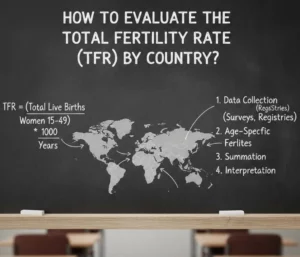
Total Fertility Rate By Country
If an infertile couple or single parents are too fatigued to conceive a baby or trying too much for that, here are the elements to evaluate the total fertility rate TFR by countries under the cluster of best IVF clinics in the world.
Beyond this, the appropriate countries that we have shared in the below animation chart to deem more accessible for initial patients for fertility procedure with high-efficiency equipment, and advanced technology to reduce the negative aspects during procedure.
|
Rank |
Country |
Total Fertility Rate (TFR) |
|
1 |
Niger |
6.73 (births per woman) |
|
2 |
Angola |
5.76 |
|
3 |
Democratic Republic of Congo |
5.56 |
|
4 |
Mali |
5.45 |
|
5 |
Benin |
5.39 |
|
6 |
Chad |
5.35 |
|
7 |
Uganda |
5.26 |
|
8 |
Somalia |
5.22 |
|
9 |
South Sudan |
5.2 |
|
10 |
Burundi |
4.96 |
|
— |
World Average |
~2.25 |
|
— |
India (approx.) |
~2.0 (2023 estimate) |
Let’s beacon on the table of total fertility rate by countries with IVF, types of surrogacy, and other essential procedures to detect the diseases.
The Mechanics Of The TFR Metric
TFR counts the expected births per woman if she lived through her full childbearing years. It skips short-term ups, and down in new child birth numbers by evaluating the total fertility rate by countries with high success rates. Unlike the crude birth rate, which seems at all births per 1,000 couples yearly, TFR focuses on women aged 15 to 49, especially for IVF procedure in India.
Why pick TFR over others? It gives a steady view of long-term trends. Demographers love it because it ignores age shifts in a population. For example, a country with many young folks might show high crude rates, but TFR reveals the real family size choice.
This metric helps spot patterns fast. Think of it as a snapshot of family life, free from yearly noise.
The Replacement Level – What Does TFR 2.1 Mean? – IVF Clinics In India

Replacement Level What Does TFR 2.1
Replacement level sits at about 2.1 kids per woman in most rich countries. That keeps the population steady, ignoring moves from elsewhere. The extra 0.1 covers kids who might not make it to adulthood.
Go over 2.1, and numbers grow quick. Stay under, and they shrink. In spots like Europe, low TFR means fewer workers soon. High ones in Africa strain schools and jobs right now.
What happens if a nation dips below? Pensions get tight. Births above? Resources stretch thin. It’s a balance act for every country.
Data Sources & Global Benchmarks
Trusty spots like the United Nations World Population Prospects and World Bank track TFR data. They pull from censuses, surveys, and health records worldwide. Updates come every few years to catch changes.
Right now, in 2026, the global average TFR hovers around 2.3. That’s down from 4.9 back in 1960. Asia leads the drop, while Africa holds steady high.
- UN data: Covers 195 countries with projections to 2100.
- World Bank: Adds economic ties to fertility stats.
- Key benchmark: Sub-Saharan Africa averages 4.6, Europe just 1.5.
In the upper case of bullets, we have shared the data sources & global benchmarks to enhance the conception rate for infertile couples. These total fertility rates have been defined by the suggested or developed countries.
Section 1 The Spectrum Of Fertility Countries At The Extremes In The World – Fertility Rate In India
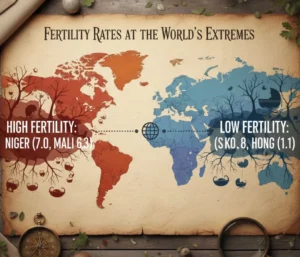
Fertility Rates At The World Extreme
High Fertility Registered Hotspots, Regions Facing Rapid Growth In The World
In Sub-Saharan Africa, TFR soars past 4 in many spots. Niger tops the list at 6.6 kids per woman. Chad follows at 5.7, and Somalia at 5.7 too.Birth control is hard to get, and farm life needs many couples’ hands. Families see kids as assisting in fields, and old-age patients care in the world.
These trends fuel fast growth. By 2050, Africa’s population might double. That brings joy in new life but stress on water and land.
Below Replacement – The Aging Crisis In Developed Nations
East Asia and Southern Europe fight low TFRs. South Korea sits at 0.8, the world’s lowest. Japan holds at 1.3, Italy at 1.2.
High living costs play a big role. Jobs demand long hours, so folks marry late or skip kids. Strong safety nets mean no need for big families to support elders.
Take Japan. Empty schools close yearly. South Korea offers cash for babies, but numbers keep falling. This shift leads to more grays than youth.
What if it stays low? Workforces shrink, dragging economies.
Navigating The Transition Countries Approaching Replacement
Latin America and Southeast Asia edge toward 2.1. Brazil’s TFR is 1.6, down from 6 in the 1960s. Indonesia sits at 2.2, Thailand at 1.3.
These places shift from farms to cities quick. Governments push education and health aid. In Mexico, free clinics cut unwanted pregnancies.
Policies matter here. Tax breaks for families help nudge rates up if needed. As they near balance, focus turns to steady growth.
Watch India too—its TFR dropped to 2.0. Small tweaks keep it stable.
Section 3: Key Socioeconomic Determinants Of National TFR With Highest Fertility Rate In The World
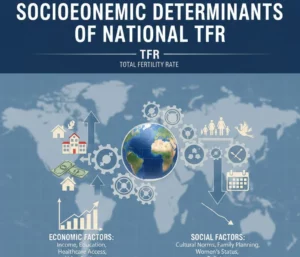
Socioeonemic Determinants Of National TFR
Education & Female Emproverment As TFR Modifiers
More infertile school years for girls link straight to fewer new born babies, each extra year cuts fertility by about 10%. Educated women grab jobs, push back to marriage, and huge plan families better.
In some destinations, for instance, Bangladesh, girl school programs have halved TFR since 1980, they join workforce development, balancing home, and relevant family careers.
Female jobs rise with education. That shifts views on family size. Why have five when two lets you thrive?
It’s a cycle: Smarter choices lead to brighter futures.
Healthcare Access & Contraceptive Prevalence Rates
Good health care drops TFR by making family planning easy. Where modern birth control reaches 70% of women, rates fall below 3. In Kenya, clinic access cut TFR from 8 to 3.4 in decades.
Unmet needs stay high in poor areas. Over 200 million women want spacing but can’t get it. That keeps births high.
Simple fixes work. Free pills and talks change lives. Access saves money on crowded services too.
Urbanization, Industrialization, & The Cost Of Child-Rearing
Cities flip the script on kids. In rural spots, large families help farms and share costs. Urban life? Diapers, schools, and rent pile up fast.
Beijing families spend $300,000 per child to adulthood. No wonder TFR is 1.0 there.
Industry pulls women to offices. Time for kids shrinks. Contrast that with village life, where grandmas watch the little ones.
This push from country to town reshapes total fertility rate by countries big time.
Sections 4: Policy Interventions & Their Influence On Fertility Rates

Policy Interventions Fertility Rates
Pro-Natalist Policies – Encouraging Higher Birth Rates
Low-TFR nations try boosts like paid leave and kid cash. France offers long maternity breaks; its TFR holds at 1.8.
Sweden’s subsidies cover daycare half the cost. That helps parents juggle work. Results? Steady rates above neighbors.
But not all win. Hungary’s “baby bonus” loans forgive debt for three kids. Uptick happened, but small. Policies aid, yet culture trumps cash often.
Family Planing Initiatives In High-Growth Regions
Asia’s past shows wins. India’s 1970 drives spread informative info, and tools, dropping TFR from 6.5 to 8.5.
Iran’s 1990s push hit 80% contraceptive use. Births fell 60% in a decade. Voluntary talks and cheap options key.
These efforts space kids, ease poverty. No force, just choice. Success stories guide Africa now.
The Ethics Of Demograhic Enginneering
Supportive aid beats mandates. China’s old one-kid rule hurt women and skewed sexes. Now they scrap it for incentives.
Ethics ask: Who decides family size? Coercion breeds resentment. Better to offer help, let folks choose.
Balance rights with needs. Policies should lift, not push.
Sections: 5 The Future Impliacations Of Divergent Global TFR

Future Implications Of Divergent Fertility
Economic Stagnation & Dependency Ratios In Low-TFR Nations
- Low TFRs age crowds fast. By 2050, Japan’s workers-to-retirees ratio hits 1:1. Pensions strain, growth slows.
- Fewer young buyers hit shops and homes. GDP per person might rise, but total shrinks.
- Immigration helps fill gaps. Yet without it, stagnation looms.
Resource Strain & Infrstructure Challenges In High TFR Nations
- High growth overloads systems. Nigeria’s TFR at 5.2 means 400 million by 2050. Schools overflow, jobs scarce.
- Water and food stretch thin. Cities like Lagos jam with new arrivals.
- Build fast or face unrest. Aid and smart plans ease the load.
Global Migration Patterns Dirven By Demographics Imbalance
- TFR gaps drive moves. Europe’s low rates pull youth from Africa’s high ones. Millions head north for work.
- This fills jobs but sparks debates on borders. Remittances aid home countries too.
- Future flows grow. Low spots need migrants; high ones lose talent.
Final Wording – Total Fertility Rate By Countries For Demographic Resilience
Total fertility rate by country for demographic resilience in this content, along with it, TFR big forces, for instance, procedure money, learning, and health care. Examine the high-rate countries wrestle growth pains like low ones face empty nests.
This will assist to enhance the chances of concpetion of a new little child with high success rate. On the other hand, from Niger’s 6.6 o south Korea’s 0.8 total fertility rate by country, and shows our shared split world rating.
Beyond this, check the latest or trending blogs or contents on the official website, for instance, www.worldfertilityservices.com to enhance the influence in the medical world.

Devender Gill is an experienced medical blogger & writer on the healthcare researcher with a strong focus on numerous treatments based on the official info from clinics aross network. He Specializes in creating accurate, easy-to-understand medical content covering, medical topics, for instance, IVF, Surrogacy, IUI, ICSI, and other essential ones.
Table of Contents

 WhatsApp us