
IVF with donor egg process step by step is a revolutionary fertility procedure intended to assist individuals or couples who are unable to conceive using their eggs because of things like advanced maternal age, low-quality eggs, or genetic issues. To determine the recipient’s health and reproductive requirements, the process starts with a consultation and evaluation.
After being chosen, an egg donor who could be known or anonymous goes through a rigorous genetic and medical evaluation to make sure she is a good fit. Hormonal drugs are used to synchronize the recipient’s (or surrogate’s) and donor’s menstrual cycles to coordinate the time of uterine preparation and egg retrieval. Following ovarian stimulation, the donor produces several eggs, which are subsequently extracted via a simple surgical operation.
In the meantime, the donor eggs are fertilized in a lab to produce embryos using sperm from the intended father or a sperm donor. The healthiest of these embryos are selected for transfer after close observation. To get her uterine lining ready for implantation, the receiver takes hormone medicines. The chosen embryo is inserted into the uterus during a painless embryo transfer process. In the below content, we have dropped down the clues or key elements that will disclose the exact points that will refine the conclusion.
Check Out The IVF With Donor Egg Process Step By Step
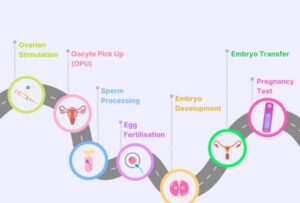
IVF With Donor Egg Process Step By Step
A thorough medical consultation and evaluation of the intended parent or parents is the first step in the procedure. To decide if a patient is eligible for IVF using donor eggs, the doctor looks at their medical history, fertility issues, and general health. This covers hormone level assessments, ultrasounds, and fertility tests.
Egg Donor Selection
The intended parent or parents may select an egg donor according to their preferences, including physical traits, educational background, or other qualities. To guarantee appropriateness, egg donors—who may be known or anonymous are carefully examined for genetic, psychological, and physical conditions.
Menstrual Cycle Synchronization
The intended mother’s (or surrogate’s) and the egg donor’s menstrual cycles are synchronized to get ready for the procedure. Hormonal drugs are used to make sure the recipient’s uterus is ready for embryo transfer and the donor’s eggs are extracted at the best moment.
Ovarian Stimulation
To promote the creation of several eggs, the egg donor receives ovarian stimulation using fertility drugs. Using blood tests and ultrasounds, this is closely watched to make sure the eggs develop as intended.
Egg Retrieval from the Donor
Follicle aspiration is a minor surgical technique used to remove mature eggs from the donor. Eggs are extracted from the donor’s ovaries using a tiny needle while under anesthesia.
Sperm Collection and Fertilization
A sperm sample is taken from the prospective father or a sperm donor on the same day as the egg is retrieved. To generate embryos, the sperm and eggs are mixed in a lab using either intracytoplasmic sperm injection (ICSI) or traditional fertilization.
Development and Monitoring of Embryos
The fertilized eggs, or embryos, are cultivated for some days in a laboratory. To guarantee healthy growth and development, they are constantly observed. Preimplantation Genetic Testing (PGT) is one type of genetic testing that is sometimes used to check for chromosomal abnormalities.
Uterine Preparation
To get the uterine lining ready for implantation, the recipient (intended mother or surrogate) takes hormonal drugs like progesterone and estrogen. Successful embryo implantation depends on a uterine lining that is both thick and responsive.
Pregnancy Test and Follow-Up
To ascertain whether the embryo transfer was successful, a blood test is conducted 10–14 days following the procedure. To guarantee a safe pregnancy, follow-up appointments and routine monitoring are planned if the pregnancy test comes back positive.
Freezing Remaining Embryos
Cryopreservation can be used to freeze and store any healthy embryos that are left over for later use. This offers the possibility of future family planning or more efforts if necessary.
Embryo Transfer
The intended mother or surrogate’s uterus receives the healthiest and most viable embryo or embryos. Under ultrasound guidance, this rapid and painless surgery is carried out.
How Is IVF Done With Donor Eggs? – IVF With Donor Egg Process Step – Step

IVF Done With Donor Eggs
IVF with donor eggs is a specialist fertility treatment that helps people or couples become pregnant by using donor eggs. The first step in the procedure is choosing an egg donor, who is subjected to a thorough medical, genetic, and psychological evaluation to guarantee their compatibility. Hormonal drugs are subsequently administered to the donor to encourage the production of many eggs from her ovaries. When the eggs are ready, they are extracted using a minimally invasive technique.
To guarantee ideal conditions for embryo implantation, the recipient simultaneously gets her uterus ready with hormonal drugs. Using sperm from the recipient’s partner or a sperm donor, the recovered donor eggs are fertilized in a lab to create embryos. The healthiest embryo is chosen to be transferred into the recipient’s uterus after the embryos are observed for development.
In a fertility clinic, embryo transfer is a straightforward and painless procedure. To increase the likelihood of implantation and a healthy pregnancy, the receiver receives ongoing hormone treatment following the transfer. For later usage, the remaining viable embryos can be frozen. IVF with donor eggs has a high success rate in producing a healthy pregnancy and gives hope to people who are dealing with issues like poor egg quality, advanced age, or genetic diseases.
What is the Eligibility of an Egg Donor – IVF with Egg Donor
There are different criteria to select an Egg Donor, like age, medical history and many more. A donor must meet all the criteria to donate their eggs. Now, here we are going to describe all the aspects, like: An Egg donor should be a healthy woman, generally aged between 21 and 32. An Egg Donor must not have any genetic or infectious diseases, and regular periods are a must. Doctors also check ovarian reserve to make sure her eggs are of good quality and shape.
Screening of a donor is not just about their physical health. The expert must go and deep dive into family history, hormones, infections, and mental health and the donor’s emotional stability also matters just as much as physical fitness meets all the standards to be a healthy donor
Donors must not have a history of drug use, alcohol or smoking. The donor must follow all the legalities of Donor Egg Egencies and stick to medical instructions, and keep the whole process confidential. It is a serious decision and commitment where every step counts.
What are the Success Rate & Cost of Egg Donation Treatment in India?
When things get tough egg donor with IVF is the better option to be a parent. Donor egg IVF generally gives couples a better option to get conceived. The selection og egg donors depends on costs, donors’ health and personal choices still matter. If you wanted to look for an egg donor, take the time to plan, pick a good clinic, and really get what’s involved in picking an egg donor and give yourself a chance to yourself again to live a parenthood life again.
Factors Influencing Success Rates
As the success rate depends on several things, like when you choose the younger egg donors, which means healthier eggs, and that enhances the rate of success. For most women aged up to 50, their success rates with donor eggs go up to around 50 to 60 per cent per cycle, but the condition is that the uterus should be healthy with a proper lining, and no major issues are important, and the sperm quality matters too. Many clinics report live birth rates around 55%, which is more effective than usual IVF for women of older age
There are more things you can do to increase the success rate by following such things as quitting smoking, managing stress, and just taking care of yourself, all help to get better results. Honestly, a positive outlook and following your doctor’s advice can make the whole process smoother and improve your chances.
Complete Cost Breakdown of IVF with Egg Donor
The use of donor eggs in IVF can be expensive; typically, a single cycle ranges from 2 lakh to 4 lakh per cycle. The result is influenced by various factors associated with the procedure. The donor is compensated between 30k to 60k per cycle, while the charges of an egg donor agency range from 2 lakh to 5 lakh (including medication, donor fee and Procedures)
How Do I Prepare For A Donor Egg Pregnancy? – Donor Egg IVF Rules In India
To guarantee the greatest result, preparing for a donor egg pregnancy requires both emotional and physical preparedness. First, speak with a fertility doctor to go over your medical history and have your general health assessed.
To make sure your body is prepared to carry a baby, you might require testing like blood work, ultrasounds, and a uterine evaluation. To get your uterus ready for embryo implantation, your doctor will give you hormonal drugs like progesterone and estrogen. Lifestyle changes are also essential. Eat well, get frequent exercise, and abstain from alcohol, tobacco, and too much caffeine.
It can be helpful to manage stress by practicing relaxation methods like yoga or meditation. Focusing on emotional readiness is also crucial because donor egg pregnancy may provide particular difficulties. Considering the egg donor cost, along with the emotional and physical aspects, can add another layer of complexity to the process. To process your emotions and talk about any worries you may have, think about getting counseling or joining a support group.
Furthermore, it’s critical to comprehend the ethical and legal ramifications of using donor eggs because local laws may differ. Lastly, to make sure you feel supported during the trip, keep lines of communication open with your spouse or support network. You can improve your chances of a healthy baby and a successful donor egg pregnancy with the right planning and direction.
Egg Donation Treatments, Costs and Success Rate – Egg Donation in Mumbai, India
Here is the table exactly provided to you with the numerous treatment costs and their success rate. With the help of the table, it would be easy for you to obtain the information clearly with the specific cost:
|
Services |
What It Includes |
Estimated Cost in INR |
Average Success Rate |
|
IVF with Donor Eggs |
Donor selection, stimulation, egg retrieval, fertilisation, embryo transfer |
₹18–₹25 Lakhs |
65–80% |
|
Frozen Donor Egg IVF |
Pre-frozen donor eggs, thawing, fertilisation, transfer |
₹14–₹20 Lakhs |
55–70% |
|
Fresh Donor Cycle |
Fresh donor recruitment, medication, retrieval, and IVF cycle |
₹20–₹28 Lakhs |
70–85% |
|
Donor Egg + ICSI |
Donor eggs fertilised using ICSI for male factor issues |
₹19–₹26 Lakhs |
65–80% |
|
Embryo Donation |
Ready-made donated embryos (egg + sperm donor) |
₹1.5–2.5 Lakhs |
50–70% |
|
Double Donation (Egg + Sperm Donor) |
Both gametes donated, IVF and transfer |
₹2.5–4 Lakhs |
60–75% |
|
Egg Donor Screening Package |
Medical tests, genetic screening, and an infectious disease panel |
₹30,000–₹60,000 |
— |
|
Embryo Freezing + Storage |
Freezing extra embryos & yearly storage |
₹25,000–₹50,000 + yearly ₹10,000–₹20,000 |
Embryo survival 90–95% |
|
PGT/Genetic Testing (Optional) |
Screening embryos for chromosomal issues |
₹40,000–₹1.5 Lakhs |
Increases healthy pregnancy |
How Much Are Donor Eggs Costly With IVF In India? – IVF Donor Egg Age Limit

Donor Eggs With IVF In India
Depending on the fertility clinic, location, and services offered, donated eggs with IVF in India can cost different amounts. IVF with donor eggs typically costs between ₹2,50,000 and ₹4,50,000 per cycle. This expense usually covers the payment to the egg donor, medical treatments, prescription drugs for both the donor and the recipient, and lab fees for fertilization and embryo transfer.
Advanced procedures such as embryo freezing, preimplantation genetic testing, or intracytoplasmic sperm injection (ICSI) may incur additional costs. Due to their advanced facilities and increased demand, clinics in major cities like Delhi, Mumbai, and Bangalore may charge higher fees; in contrast, smaller cities may offer slightly reduced prices.
Despite these expenses, IVF using donor eggs in India is frequently less expensive than in many other nations, which makes it a well-liked option for people from outside who are looking for fertility therapy. To fully comprehend the cost breakdown and investigate financing or package alternatives, couples are advised to conduct extensive research and speak with the fertility facility of their choice.
Which IVF Clinic Is The Best For Fertility Treatment? – IVF With Donor Egg Process Step By Step
Multifarious criteria, like as success rates, cutting-edge medical equipment, skilled professionals, and patient-centered care, influence the choice of the finest IVF clinic for fertility therapy. Several of the best choices, including World Fertility Services, Indira IVF, Cloudnine Fertility, Apollo Fertility, and Nova IVF Fertility, are well-known in India for their excellent services and high success rates.
Modern facilities, highly skilled embryologists, and individualized treatment programs depending on each patient’s needs are all provided by these clinics. Additionally, they offer complete fertility treatments, such as donor programs, egg freezing, IVF, ICSI, and surrogacy.
A clinic’s success record, patient feedback, cost transparency, proximity, and support services should all be taken into account while selecting the ideal one. Setting up consultations is crucial if you want to talk about your issue and develop trust in the clinic’s staff and methodology. You can choose the best clinic to fulfil your aspirations of becoming a parent with careful consideration and direction.
What are the Best Egg Donation Clinics in India, with their Location and Success Rate?
In India, there are several Egg Donation Clinics with the best IVF treatment that provide fertility services across India with a huge no of success rates. Here we are giving you the information regarding those clinics that are experts in infertility treatments and related programs, so you can choose the clinics accordingly:
|
Clinic |
Location |
Short Note |
Success Rate |
|
World Fertility Services |
New Delhi(Branches across India) |
Provides all infertility treatments like IVF, donor egg, surrogacy and ART treatments with patient–focused care and is well-known doctors. |
72% |
|
Risaa IVF |
New Delhi |
A well-known fertility chain provides IVF, ICSI, donor egg programs, and customised fertility plans. |
50–60% |
|
Fertilityworld |
Gurugram |
Known for ethical and transparent fertility services, it offers IVF, donor programs, and high-end fertility care. |
~50–60% |
|
Go IVF Surrogacy |
Pan India |
Provides IVF, surrogacy, donor egg and sperm programs with low-cost packages and specific cycle planning. |
~60–65% |
|
Corion Fertility Clinic |
Mumbai |
A well-known advanced IVF centre provides individualised donor egg cycles by following all the ethical protocols. |
up 75% |
|
Rainbow Hospitals |
Hyderabad, branches across India |
A multispeciality hospital chain that offers fertility treatments, including IVF, donor eggs, and the latest ART treatment. |
60% |
|
Iswarya Fertility |
Hyderabad & multiple lof South India |
Popular fertility networks provide IVF, ICSI, donor programs, and surrogacy with long-standing experience. |
~60–70% |
|
Indira IVF |
Pan India |
India’s largest fertility chain offering IVF, ICSI, donor programs with standardised protocols and wide accessibility. |
~55–63% |

Devender Gill is an experienced medical blogger & writer on the healthcare researcher with a strong focus on numerous treatments based on the official info from clinics aross network. He Specializes in creating accurate, easy-to-understand medical content covering, medical topics, for instance, IVF, Surrogacy, IUI, ICSI, and other essential ones.
Table of Contents
 WhatsApp us