

Overwhelming string to check the difference between Gestational Surrogacy Vs Traditional Surrogacy with a suitable example. Building a family with a little child to accomplish a maze these days. Among the infertile couples, individuals turn to surrogacy treatment to conceive a baby through a surrogate mother who undergoes the certified laboratories or clinics in the world.
At the accurate path, gestational surrogacy vs traditional surrogacy with decoding the difference for intended parents to enhance the chances of IVF conception. This content or its components deem the essential aspects to grab the best opportunities in which to seize the best fit for your fertility journey in the following sentences, and tables.
Apart from this, surrogacy treatment is a renowned choice for those couples who aren’t able to combine or share their reproductive organs to produce a healthy embryo in a dish. Surrogacy contains three parties, for instance, a surrogate mother who carries a baby in her womb, and intended parents who get a petition for surrogacy treatment, and at least one is selected by the surrogacy clinic from the list of the best surrogacy agencies in the world. It offers hope to those facing infertility, sam-sex couples, single folks to become parents. Here with a well-being description, the difference between Gestational Surrogacy Vs Traditional Surrogacy with a huge goal to spotlight keys in biology, laws, health steps, and emotional support. You’ll walk away ready to make smart choices backed by solid info. Let’s dive into what sets these surrogacy methods apart.
Let’s Understand The Core Biological Differences Between Gestational Surrogacy Vs Traditional Surrogacy
The biological core difference between Gestational Surrogacy Vs Traditional Surrogacy lie in the genetic relationship between the surrogate or a child. Simplify the determination with gestational surrogacy definition in which a surrogate mother or child have no genetic relationship via using the eggs or sperm of intended parents.
The language speaks the truth that surrogacy shares no genetic relations connections under the surrogacy laws or regulations in the specific country or its territories. In contrast, traditional surrogacy in which intended parents might be half parent with a surrogate mother due to sharing genetic relation with a new child to a surrogate mother.
The difference can be checked by examining the DNA tests to recognize the real parents of IVF babies. As per the laws or regulations, clinic or intended parents can detect the relation with their child, if in the bond they have shared the rights to become fortune parents with legal fights or rights.
Definition Of Gestational Surrogacy In Chosen Surrogacy Agency In The World
Though WHO records or specific country laws define the best definition of gestational surrogacy, a surrogate mother has no genetic link to the child due to government restrictions or barriers under bond. In the whole surrogacy treatments, numerous essential treatments are included, for instance, IVF stands for In Vitro Fertilization, ICSI, PGD testing, and egg or sperm donor facilities if intended parents have need.
Fusion of intended father sperm or donor eggs will combine in the laboratory dish to create a healthy embryo, and it will be placed into her uterus to develop a baby with a natural pregnancy period of 9 to 12 months.
The day one, surrogacy doctors implant the implantation of a healthy embryo into her uterus, with the assistance of lab tools or the latest technology to reduce the time or risks together. The surrogate mother plays a crucial role in the treatment who has a bunch of responsibilities or tasks to keep the embryo in their womb for a long-period.
She carries the baby to term under the supervision of surrogacy doctors who have decades of experience or achievements to enhance the ability of pregnancy in the initial stage of treatment. This setup boosts success rates, in which different past studies show IVF in gestational cases hits about 50 to 70 percent success rate at certified surrogacy agencies in the world, in several countries, gestational surrogacy approved with all aspects under the government regulations or laws.
Definition Of Traditional Surrogacy – Straight Surrogacy Process In The World
On the other hand, the one more array described the definition of traditional surrogacy works differently instead of gestational surrogacy with a unique method. Traditional surrogacy contains certain importance at the side of a surrogate mother. A surrogate mother is fully entitled to keep the child as per the traditional surrogacy laws. A new born child has genetic relations with a surrogate mother due to the parents’ observability of low reproductive sharing organs to petition for the child.
The surrogate provides her own egg to conceive a baby with intended father sperm with the obtaining laboratory process to combine each other in a dish. All the appropriate aspects make her the baby’s biological mother, and have all rights to keep it with its own home or personalized care. The process skips IVF. Instead, it uses artificial insemination. Doctors place sperm from the intended father or donor into her uterus or cervix.
This simple element leads to pregnancy with doctor guidance, the surrogate’s body does the rest, but her genetic role sparks big issues. She might feel a strong pull toward the child after birth. Laws often complicate handing over rights.
What Are The Best Surrogacy Agencies In The World For Gestational Surrogacy Vs Traditional Surrogacy?

Best Surrogacy Agencies In The World
This is entailed to overseas the best surrogacy agencies in the world between Gestational Surrogacy Vs Traditional Surrogacy with a suitable table to determine the best surrogacy clinic in the world. Besides the paragraph, table is the most considerable part of the content in which each exciting patient or audience can check all ones, and do comparison between the compact surrogacy clinics with a success rate report.
Thus, we affixed those countries in two tables to show gestational vs. traditional surrogacy in certain countries or home countries under the surrogacy act to follow the fellowship of the country. Let’s beacon on the eagerness to refine the clinics as per your needs or recommendation from your suggested surrogacy clinic in the following sentences with world fertility services clinic to provide the comprehensive medical aspects or services.
|
Agency / Clinic Name |
Country / Region |
Gestational Surrogacy Legal Status |
Estimated Success Rate |
Key Highlights |
|
Circle Surrogacy |
USA |
Legal in many U.S. states with strong contractual protections |
~99% journey completion rate |
Over 25 years of experience; international client base; full-service legal and medical support. |
|
ConceiveAbilities |
USA (Global) |
Legal in several U.S. states; only gestational surrogacy supported |
75–90% success rate |
Ethical surrogacy programs; strict screening and matching systems; high IVF success through partner clinics. |
|
Surrogacy Miracles Consulting |
USA |
Gestational surrogacy permitted; strong agency-physician coordination |
~89% success rate |
Comprehensive guidance for intended parents; personalized surrogate matching. |
|
World Fertility Services Clinic |
India & Global |
Gestational surrogacy supported under local laws; compliance with medical regulations |
70–80% success rate |
International fertility network; transparent cost structure; multilingual patient care. |
|
IVF Surrogacy Clinic |
India |
Gestational surrogacy allowed for specific domestic cases; international coordination available |
65–75% success rate |
Affordable programs; strong embryo transfer and IVF success rates. |
|
Go IVF Surrogacy |
India (Global Presence) |
Gestational surrogacy legally regulated; adheres to ethical practices |
70–85% success rate |
High success in IVF and embryo transfers; global patient support; cost-effective options. |
|
Indira IVF Clinic |
India |
Gestational surrogacy under restrictive Indian surrogacy law (for eligible couples) |
65–80% success rate |
Advanced IVF technology; nationally recognized fertility brand; experienced fertility specialists. |
Take it seriously to check the best gestational surrogacy agencies in the world for a short description to recognize the right one in the cluster ones. These countries only allow gestational surrogacy which is known as an altruistic surrogacy with no genetic link with a surrogate mother under the signed bond in the vision of government or its court documentation or bonds beforehand the surrogacy in your preferred country or its city, and states.
Traditional Surrogacy Agencies In The World – Types Of Surrogacy
With multi-chances in surrogacy is lower than as compared to other fertility treatments, traditional surrogacy in the world is different from gestational surrogacy to procedure the treatment under the overwhelming surrogacy rules against having rights of intended parents with traditional surrogate mother in certain countries with little-bit compensation to her for their service.
|
Agency / Program Name |
Country / Region |
Legal Status of Traditional Surrogacy |
Estimated Success Rate (Range) |
Key Notes / Regulations |
|
ConceiveAbilities (Traditional Pathway) |
USA (select states) |
Legal in some U.S. states (e.g., Illinois, California, and Texas) where contracts are enforceable with court pre-birth orders |
60–75% |
Allowed under strict legal agreements; surrogate is biological mother but must relinquish parental rights post-birth. |
|
Extraordinary Conceptions |
USA |
Permits traditional surrogacy on a case-by-case basis depending on state laws |
65–80% |
Works under regulated legal frameworks ensuring consent and parental transfer procedures. |
|
Canadian Surrogacy Options (CSO) |
Canada |
Altruistic traditional surrogacy legal (no commercial payment) |
55–70% |
Surrogates may use their own eggs; only expense reimbursement is allowed under Canadian law. |
|
Surrogacy UK (Private Arrangements) |
United Kingdom |
Altruistic traditional surrogacy allowed but contracts are not legally binding |
50–65% |
A surrogate is a legal mother at birth; parental order requires post-delivery to transfer parenthood. |
|
Growing Families Network |
Australia (limited states) |
Altruistic surrogacy allowed; traditional surrogacy permitted in certain regions (e.g., NSW, ACT) |
55–75% |
Legal recognition depends on regional laws; counseling and legal oversight are mandatory. |
|
Private Independent Surrogacy Arrangements |
Kenya / South Africa |
Unregulated but tolerated; some private agencies facilitate traditional surrogacy |
50–70% |
Legal frameworks under development; contracts rely heavily on mutual trust and private agreements. |
Now, traditional surrogacy is feasible for intended parents in these certain countries to get a baby through traditional surrogacy with a genetic link with a new born child with their success rate. All the things are dependent on your side to make this surrogacy accessible with different parties in traditional surrogacy in the world.
What Are The Gestational Surrogacy Vs Traditional Surrogacy Cost In The World? – Surrogacy Costs
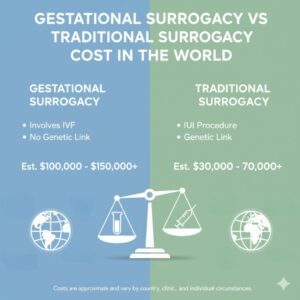
Gestational Surrogacy Vs Traditional Surrogacy Cost In World
Facet to check the Gestational Surrogacy Vs Traditional Surrogacy costs in the world with world fertility service reports or cost charts. Aptitude patients can handle the expenses of surrogacy treatment, but certain patients cannot pay the whole amount as per fortuneless infertile couples or individuals due to low-budget. Vary based costs in the following sentences or table to obtain the specific cost for fertility treatment with each surrogacy steps-by-steps to examine with the crystal eyes of surrogacy experts.
|
Treatment Step / Cost Component |
Gestational Surrogacy (Estimated Cost in USD) |
Traditional Surrogacy (Estimated Cost in USD) |
Explanation / Notes |
|
Medical Procedures (IVF / IUI) |
$15,000 – $40,000 |
$5,000 – $15,000 |
Gestational surrogacy involves full IVF and embryo transfer, while traditional surrogacy may use intrauterine insemination (IUI), which is less costly. |
|
Egg & Sperm Donation (if required) |
$5,000 – $15,000 |
Usually not needed (surrogate uses her own egg) |
In gestational surrogacy, donors may be used; in traditional surrogacy, this cost is avoided. |
|
Surrogate Screening & Medical Tests |
$2,000 – $5,000 |
$1,000 – $3,000 |
Covers psychological, medical, and background screenings for the surrogate. |
|
Surrogate Compensation & Allowances |
$15,000 – $40,000 |
$10,000 – $30,000 |
Compensation varies by country and agreement type; gestational surrogates typically receive more due to higher medical involvement. |
|
Agency / Coordination Fees |
$10,000 – $30,000 |
$8,000 – $25,000 |
Agencies coordinate matching, medical care, and legal arrangements; costs are higher for IVF-based gestational surrogacy. |
|
Legal & Documentation Fees |
$5,000 – $15,000 |
$7,000 – $20,000 |
Traditional surrogacy often has higher legal complexity due to the surrogate’s genetic link to the child. |
|
Insurance & Miscellaneous Costs |
$3,000 – $10,000 |
$2,000 – $8,000 |
Includes medical insurance, travel, maternity needs, and contingencies. |
|
Total Estimated Cost Range (Global Average) |
$50,000 – $120,000+ |
$35,000 – $80,000+ |
Gestational surrogacy is costlier due to IVF and medical procedures; traditional surrogacy is cheaper but legally riskier. |
Genetic Relationship Table – Traditional Surrogacy Vs. Gestational Surrogacy
Here’s a quick look at who contributes what in each surrogacy type. It shows the clear split.
|
Treatment Step / Component |
Gestational Surrogacy |
Traditional Surrogacy |
Notes / Explanation |
|
Intended Mother |
Provides egg (or uses donor egg) |
Usually not involved |
In gestational surrogacy, the intended mother or donor provides the egg; in traditional, she may not be biologically involved. |
|
Intended Father |
Provides sperm (or uses donor sperm) |
Provides sperm (or uses donor sperm) |
Same contribution in both types of surrogacy. |
|
Surrogate Contribution |
Provides uterus only |
Provides egg and uterus |
Gestational surrogates have no genetic link; traditional surrogates are the biological mother. |
|
Medical Procedures (IVF / IUI) |
$15,000 – $40,000 |
$5,000 – $15,000 |
IVF required in gestational surrogacy; IUI or insemination in traditional surrogacy. |
|
Egg & Sperm Donation (if required) |
$5,000 – $15,000 |
Usually not needed |
Traditional surrogacy often uses the surrogate’s egg, avoiding donor costs. |
|
Surrogate Screening & Medical Tests |
$2,000 – $5,000 |
$1,000 – $3,000 |
Psychological, medical, and background screening costs for surrogate. |
|
Surrogate Compensation & Allowances |
$15,000 – $40,000 |
$10,000 – $30,000 |
Higher compensation for gestational surrogates due to IVF and medical procedures. |
|
Agency / Coordination Fees |
$10,000 – $30,000 |
$8,000 – $25,000 |
Agency fees include matching, medical coordination, and legal assistance. |
|
Legal & Documentation Fees |
$5,000 – $15,000 |
$7,000 – $20,000 |
Traditional surrogacy often requires more legal work due to genetic link of surrogate. |
|
Insurance & Miscellaneous Costs |
$3,000 – $10,000 |
$2,000 – $8,000 |
Covers medical insurance, travel, maternity support, and contingencies. |
|
Total Estimated Cost (Global Average) |
$50,000 – $120,000+ |
$35,000 – $80,000+ |
Gestational surrogacy generally more expensive but legally safer; traditional is cheaper but higher legal risk. |
- Gestational: Baby’s genes come fully from intended parents or donors. Surrogate just hosts.
- Traditional: Surrogate shares half the genes. That link can stir family drama.
What Are The Legal Framework & Parental Rights Implications In The World? – Traditional Vs. Gestational Surrogacy

Legal Framework & Parental Rights
Biology shapes the rules around surrogacy. A genetic tie can turn a happy birth into a court battle. Gestational setups often sail through smoother. Traditional ones hit more snags. Knowing this helps you plan ahead.
Legal Status Of Traditional Surrogacy
Traditional surrogacy faces tough laws in many spots. The surrogate’s biological role gives her automatic mom status at birth. In some US states like California, courts might honor contracts. But others, like Michigan, ban it outright. You could face adoption steps or fights over custody.
Internationally, places like the UK restrict it heavily. Pre-birth orders rarely apply here. The surrogate must give up rights after delivery. This process drags on and costs extra. Real cases show surrogates backing out due to that bond. It leaves intended parents in limbo.
Establishing Parentage In Gestational Arrangements
Gestational surrogacy shines in legal terms. No genetic link means intended parents claim rights from the start. Many states offer pre-birth orders, or PBOs. These list you on the birth certificate right away. No adoption needed.
Doctors and lawyers set this up early. It covers the embryo transfer phase. A reproductive law expert once said, “Gestational agreements cut through for parents are parents from day one.” This clarity speeds things up. You avoid post-birth headaches.
What Are The Medical Procedure & Health Considerations In India Or Other Countries? – Surrogacy Laws & Regulations
Surrogacy involves doctor visits and tests. The paths differ a lot. Gestational needs high-tech steps. Traditional keeps it basic. Both require care for the surrogate’s well-being.
The Role Of In Vitro Fertilization IVF In Gestational Surrogacy
IVF drives gestational surrogacy. First, the egg source gets hormones to make many eggs. Doctors retrieve them with a quick procedure. Sperm fertilizes the eggs in a dish.
Embryos develop for three to five days. Experts pick the healthiest for transfer. The surrogate takes meds to prep her uterus. The transfer feels like a Pap smear—no surgery. After, she rests and monitors the pregnancy. This method lets you screen for issues early. It raises the odds of a healthy baby.
The Insemination Process In Traditional Surrogacy With Doctor Expertise
Traditional surrogacy skips the lab work. It uses artificial insemination. Timing matters: doctors track the surrogate’s cycle. On the right day, they insert sperm via a thin tube.
This can happen at home or in a clinic. No cuts or anesthesia needed. Pregnancy tests confirm success weeks later. It’s less invasive. But it relies on the surrogate’s natural fertility. Cycles might take months to work.
Health Risks & Screening Protocols
Both types screen surrogates hard. They check physical health, mental state, and background. Gestational carriers dodge ovulation drugs. That cuts hormone side effects like mood swings.
Traditional surrogates face those meds if cycles need a boost. Risks include multiples or early labor in both. Stats show surrogates have low complication rates under 10% for serious issues. Agencies match you with cleared women. This keeps everyone safe.
How To Trigger To Check Emotional, Ethical & Practical Realities In The World? – Altruistic Surrogacy Vs. Commercial Surrogacy

Altruistic Surrogacy Vs. Commercial Surrogacy
Surrogacy touches hearts as much as bodies. Feelings run deep for parents, surrogates, and babies. One method builds walls; the other invites closeness. Think of it like renting a house versus owning one together. The ties matter.
Binding Emotional Ties In Traditional Surrogacy
The genetic bond in traditional surrogacy can pull hard. The surrogate might see the baby as hers. Birth brings tough goodbyes. Stories tell of surrogates changing minds or feeling loss years later.
Counseling helps. Agencies stress open talks upfront. Set boundaries early. If you go this route, plan for therapy sessions. It eases the handover. Many find the emotions too raw to handle.
Relationship Dynamics In Gestational Arrangements
Gestational surrogacy sets a pro line. The surrogate acts as a partner, not a parent. You bond over checkups and milestones. But she knows the baby is yours genetically.
This setup fosters trust without jealousy. Contracts outline contact levels some stay friends, others fade away. It’s like hiring a skilled teammate for a big goal. Emotions stay balanced. Intended parents often report less stress this way.
Financial Investment & Timeline Comparison – Difference Between Gestational Surrogacy Vs Traditional Surrogacy
Costs vary between surrogacy methods. Gestational surrogacy runs $100,000 to $150,000. IVF alone adds $15,000 per cycle. Legal fees stack up, but PBOs save time.
Traditional surrogacy costs less $50,000 to $100,000. No IVF cuts expenses. Yet, legal battles might hike it back up. Timelines differ too. Gestational can wrap in 12-18 months with quick approvals.
Traditional might stretch to two years. Fights over rights delay things. Weigh your budget and patience. Agencies offer payment plans to help.
Final Wording – Gestational Surrogacy Vs Traditional Surrogacy
Glimpse on the difference between Gestational Surrogacy Vs Traditional Surrogacy in the world with a lower budget to select the right one. The major concern goes with gestational surrogacy in huge areas or countries. In certain countries or cases, intended parents are willing to select the traditional surrogacy with minimal restrictions to conceive a baby through a surrogate mother.
Along with it, we have also affixed the best surrogacy agencies in the world with a high success rate. Make strong roots to get a successful pregnancy at the initial stage under the appropriate surrogacy experience or achievements in the whole content or its components.
As compared to the WHO, or private surrogacy agency, nowadays the most infertile couples grab the altruistic surrogacy with exciting offers to their patients. Check the latest blogs or contents on our official website, for instance, www.worldfertilityservices.com., to increase the ability in the medical industry or choose the preferred fertility treatment with the assistance of the world fertility services clinic across 21+ countries or its territories.

Devender Gill is an experienced medical blogger & writer on the healthcare researcher with a strong focus on numerous treatments based on the official info from clinics aross network. He Specializes in creating accurate, easy-to-understand medical content covering, medical topics, for instance, IVF, Surrogacy, IUI, ICSI, and other essential ones.
Table of Contents

 WhatsApp us